Father’s Day: On Emotions, Gifts, and Purchases

You never really notice how much a father sacrifices until you grow older yourself. There will always come a moment in life when you stop seeing your father as just your father and start seeing him as a person. And that is when you realize that he had his own fears, his own exhaustion, and his own life unfolding beneath everything he did for you.

That is the thing about fathers. Their influence is everywhere, but their sacrifices are easy to miss—especially when you are young and busy living inside the life they were working hard to build for you.

Father’s Day, then, becomes one of the few moments in the year when the direction flips—when the people they spent decades taking care of finally get the chance to make them feel loved and appreciated in return.


So, what do people actually choose to give?


  1. Apparel and Clothing. Clothing, footwear, watches, wallets, and belts consistently top shoppers’ lists when deciding what to give their fathers. In a way, these gifts reflect thoughtfulness even when shoppers may not fully know their dad’s passions or interests. They also remain a reliable choice because wearable items become part of his everyday life, serving as a reminder of the people who gave them.

  1. Dinners, Wine, Beer, and Curated Food Boxes. This category taps into something many fathers enjoy—a dinner, a bottle of wine, craft beer, premium coffee, or their favorite comfort meal. There is also growing interest in curated and personalized food boxes during the celebration, particularly sets that include snacks, sweets, or beverage pairings tailored to fathers’ preferences.

  1. Electronics and Gadgets. Headphones, smartwatches, portable speakers, and tech-enabled tools remain Father’s Day staples, especially among younger shoppers buying for their dads. This category is driven by the willingness to spend more on something that feels genuinely useful rather than purely sentimental.

  1. Sports, Outdoors, and Hobbies. Hobby-based gifts are also in high demand. When shoppers know their father’s interests or favorite pastimes, they naturally gravitate towards this category. Rather than organizing products into generic “gifts for him” collections, retailers may find greater success by curating gift ideas around specific hobbies and interests.

  1. Experiences and Gift Cards. When in doubt, many shoppers choose experiences such as restaurant dinner, a weekend getaway, a picnic, or a gift card that allows Dad to choose for himself. This category often peaks when shoppers feel overwhelmed by options. For retailers, the challenge is making a gift cards feel thoughtful and premium rather than a last-minute solution.

  1. Personalized Gifts. Engraved items, custom prints, photo books, and mugs featuring their names or family photos consistently rank among the most meaningful gifts. They require more effort and time, but that is precisely the point. In a world of one-click purchases, something made specifically for him stands out in a way that is increasingly rare—and deeply valued.


What Retailers Should Know This Father’s Day


Father’s Day spending is often driven less by indulgence and more by intention. Consumers are not simply buying products — they are looking for ways to express appreciation and gratitude, and this emotional layer behind every purchase is what retailers should pay attention to during the occasion.

Unlike trend-driven celebrations, Father’s Day purchases tend to be practical, thoughtful, and emotionally relevant. A simple gift can land harder than an expensive one if it feels like it actually came from someone who cared.

Accessibility also remains important. Not every family celebrates Father’s Day the same way, and not every consumer has the same spending capacity. Many households continue to be mindful of their budgets, making it important for retailers to offer choices across different price points. Affordable options should not feel like lesser options. Providing a range of selections — from small tokens to mid-range and premium items — allows more consumers to participate in the celebration regardless of budget.

Beyond products, retailers may also benefit from creating experiences that emotionally involve customers rather than focusing solely on promotions and discounts. Interactive activities can help strengthen emotional connection, increase foot traffic, and encourage social engagement.

Simple initiatives such as Father’s Day photo booths, message walls, or digital greeting campaigns can go a long way with families. A “Best Dad” photo corner with playful props or a message board where children can write notes for their fathers can transform the shopping experience into something more personal and memorable. These activities don’t cost much to set up, but they turn a routine store visit into a small memory — the kind people photograph, share, and actually remember.

For retailers, the opportunity this Father’s Day may not simply lie in selling more products, but in becoming part of the moments families hold on to.

Father’s Day will always have its commercial side. The promotions, curated gift guides, and last-minute runs to the mall will always be part of it. But beneath all of that is something that does not carry a price tag.

Consumer preferences may continue to evolve, but one thing will remain constant. Father’s Day will always be an opportunity to tell your father—in whatever way feels right for your family—that the years he spent putting everyone else first did not go unnoticed. That the sacrifices, the routines, the unglamorous acts of love, and all the little things in between added up to something worth celebrating. And it always will be.

And perhaps, if stores could sell more time and better health, that would be the greatest craze of all.


________________________________________________________________________________________________________________

Bringing value across different brands


At RetailWise, we are bringing value across different brands. We aim to ensure your satisfaction by guaranteeing the success of your business from strategy to execution. Explore our strategies, resources, and expertise and find the perfect fit for your needs click here

Follow us on our social media accounts! Facebook , IG , LinkedIn

Filipino Appetite for Japanese Products Drives AC Health’s Latest Retail Venture

Ayala Healthcare Holdings Inc. is betting on the growing local appetite for Japanese consumer goods, partnering with Nagoya-based Sugi Holdings Co. to launch a new chain of wellness-focused pharmacies in the Philippines.

The healthcare arm of Ayala Corp., through its retail unit AC Health Pharma Ventures, opened its inaugural “St. Joseph Drug Powered by Sugi” storefront at the One Ayala transit and retail hub in Makati City.

The venture aims to capitalize on a post-pandemic surge in consumer interest toward preventive healthcare, Japanese skincare, and functional wellness products, fueled in part by the record number of Filipino tourists returning from Japan.

The flagship outlet was a significant strategic pivot for St. Joseph Drug, a regional pharmacy chain acquired by the Ayala Group that has traditionally operated as standard dispenser of medicine. The new format blends traditional pharmaceutical services with curated lifestyle rows, introducing Japanese-made oral care, beauty products, household essentials, and health snacks to local consumers.

“Healthcare and wellness are becoming increasingly integrated into everyday life, and consumers today are looking for experiences that are both trusted and engaging,” said et Abarca, President and Chief Executive Officer of AC Health Pharma Ventures.

Abarca noted that the joint venture intends to transform the traditional drugstore visit into a lifestyle destination that remains accessible to the broader public.

For Sugi Holdings, the partnership serves as a key entry point into Southeast Asia’s fast-growing wellness market. The company operates more than 1,500 stores across Japan, where it has built a business model around preventive care and aging-population solutions. The financial terms of the joint venture and the specific capital expenditure earmarked for the nationwide rollout were not immediately disclosed.

The expansion comes amid aggressive competition in the Philippine pharmacy and convenience retail sectors, as major conglomerates vie for a larger share of consumer wallets. The Ayala Group’s healthcare network, which also includes the Generika Drugstore chain and the QualiMed hospital network, has been scaling up its ecosystem to capture both low-cost medicine markets and premium wellness segments.

The partnership allows the 70-year-old St. Joseph Drug brand to elevate its retail experience and capture higher-margin consumer segments, according to Dorothy Cruz, Chairman and Chief Executive Officer of St. Joseph Drug. Cruz said the collaboration allows the company to evolve its legacy by integrating Japanese retail innovation with its existing provincial network.

Tsuyoshi Yamamoto, Director and Chief Executive Officer of S. Trading, Sugi Holding’s overseas trading arm, said Japanese wellness culture is uniquely centered around daily habits and preventive care. Yamamoto added that the joint venture intends to use the One Ayala flagship as a proof of concept before expanding the brand to other urban centers across the country. (James A. Loyola)


Original Article: https://mb.com.ph/2026/06/01/filipino-appetite-for-japanese-products-drives-ac-healths-latest-retail-venture

________________________________________________________________________________________________________________

Bringing value across different brands

At RetailWise, we are bringing value across different brands. We aim to ensure your satisfaction by guaranteeing the success of your business from strategy to execution. Explore our strategies, resources, and expertise and find the perfect fit for your needs click here

Follow us on our social media accounts! Facebook , IG , LinkedIn
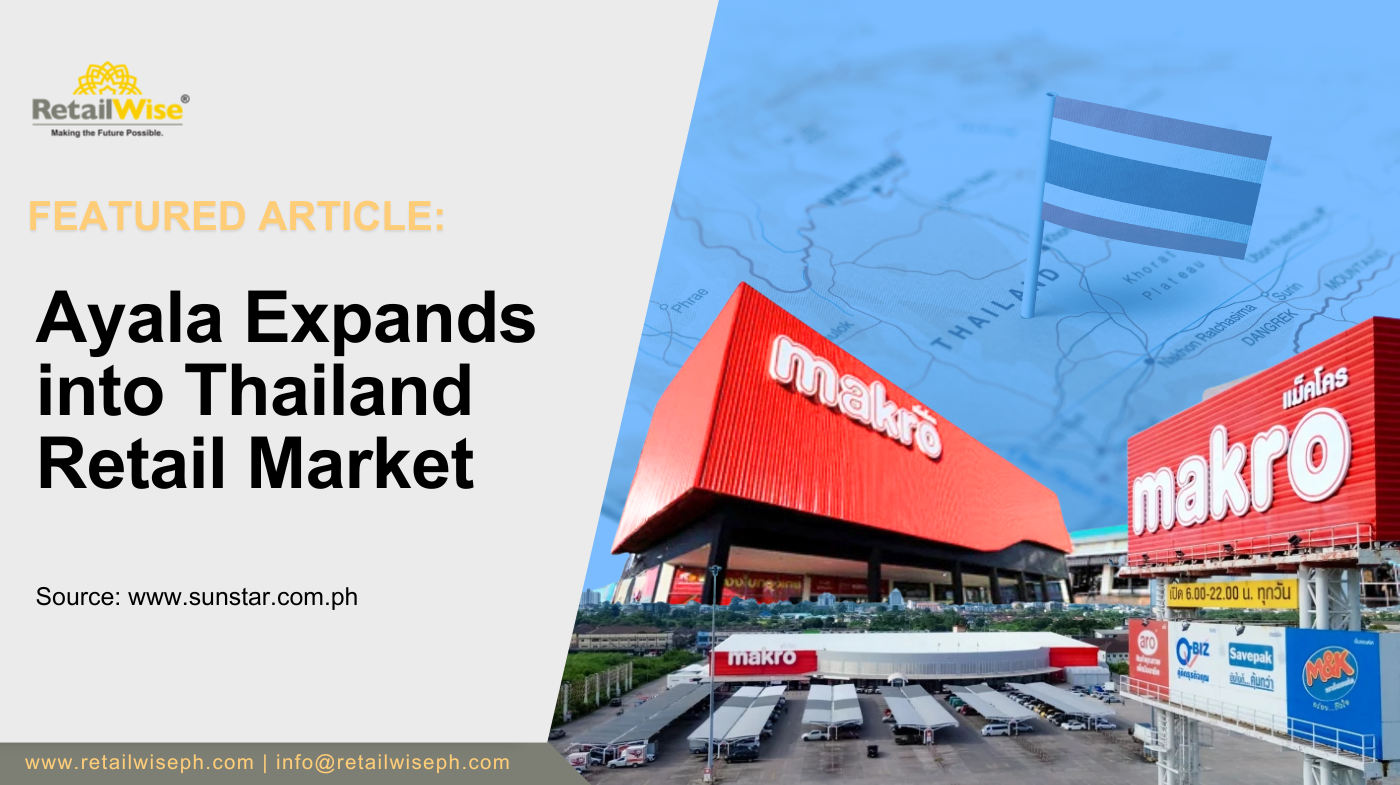
 

Ayala Expands into Thailand Retail Market

CP AXTRA Public Company Limited, the operator of Asean’s leading wholesaler – retailer Makro and Lotus’s, will strengthen mall development and asset management at Makro in Thailand under a Memorandum of Cooperation (MoC) signed with Ayala Corporation, one of the Philippines’ largest conglomerates. Through its consumer retail and mall arms, ACx Holdings Corporation (“ACx”) and AyalaLand Malls, Inc (“ALMI”), the partnership will also unlock greater shared value from CP AXTRA’s mall assets nationwide.

Under the agreement, ACx and ALMI will share methodologies and best practices in mall asset operations, leasing strategy, and project development to improve operational efficiency, enhance customer experience, and maximize the long-term value of CP AXTRA’s land and assets, initially focusing on seven key stores of Makro. The parties will also explore future investment opportunities related to mall and asset development in Thailand, alongside collaborative initiatives for the development of new sites and the redevelopment of existing CP AXTRA sites across the country. This is the third agreement signed between CP AXTRA and Ayala, underscoring the strong partnership and continued collaboration between the two groups, following their previous agreements to operate Makro in the Philippines and expand regional business opportunities.

“This agreement with Ayala allows us to combine CP AXTRA’s deep understanding of the Thai retail market with Ayala’s decades of experience in developing and leasing shopping mall spaces. By applying proven methodologies to our Makro mall, we aim to elevate the standards of the retail environment we offer, not only improving the experience for our shoppers and tenants, but also fostering sustainable growth and creating long-term value for our asset and the surrounding community,” said Tanit Chearavanont, Group Chief Wholesale Business Officer, CP AXTRA Public Company Limited.

“This is another milestone in our growing relationship and collaboration with the CP Group. Through this partnership, we intend to leverage the complementary strengths of two leading conglomerates to create world-class retail and real estate developments across markets. This also marks Ayala’s entry into the Thailand market, giving us a strong opportunity not only to share our expertise but also to gain valuable insights from one of Southeast Asia’s most dynamic and developed retail markets. More broadly, this partnership aligns with Ayala’s strategy of bringing the best of the world to the Philippines while showcasing the best of the Philippines to the world,” said Mark Uy, Managing Director and Group Head of Strategy and Business Development, Ayala Corporation.

“Makro’s nationwide footprint gives it a meaningful role in the everyday lives of Thai consumers. Our opportunity is to help turn that everyday relevance into places people choose to stay, explore, and return to. By combining CP AXTRA’s market knowledge with Ayala Malls’ experience in curating retail partners, improving customer journeys, and building community-oriented retail destinations, we believe these sites can become stronger platforms for shoppers, merchant partners, and long-term asset growth,” said Mariana Zobel de Ayala, Managing Director and Group Head of Leasing and Hospitality of Ayala Land.

The collaboration brings two complementary strengths together. CP AXTRA is one of Asean’s leading wholesale and retail operators, with more than 2,700 Makro and Lotus stores. The company is a regional leader in multi-format, omnichannel retail platforms across Southeast Asia and is advancing toward becoming a retail-tech company.

ALMI is one of the Philippines’ leading mall operators, managing 34 shopping centers recognized for their strong retail planning, curated tenant mix, and enhanced customer experience across Southeast Asia. With extensive expertise in leasing, mall operations, facility management, and mixed-use development, ALMI is well-positioned to support CP AXTRA in maximizing the value and potential of its Makro mall assets in Thailand. Ayala Corporation also brings a broader consumer and enterprise ecosystem that can complement CP AXTRA’s regional retail expansion, while ACx, its consumer retail unit, adds perspective on evolving customer behavior, format innovation, and retail partnerships.

The MoC builds on the two groups’ existing strategic partnership, which began in 2025 with the formation of CP AXTRA AC Corporation to operate Makro stores in the Philippines and was expanded to include a wider range of collaborative opportunities. This new agreement deepens that partnership further, marking the first time Ayala will bring its mall development and leasing expertise directly to CP AXTRA’s operations in Thailand.


Original Article: https://www.sunstar.com.ph/davao/business/ayala-expands-into-thailand-retail-market


________________________________________________________________________________________________________________

Bringing value across different brands

At RetailWise, we are bringing value across different brands. We aim to ensure your satisfaction by guaranteeing the success of your business from strategy to execution. Explore our strategies, resources, and expertise and find the perfect fit for your needs click here

Follow us on our social media accounts! Facebook , IG , LinkedIn


In Focus: Economic Headwinds (April 2026)

From the previous edition of In Focus, early signs of shifting market conditions had already begun to emerge. Rising transport costs, weakening purchasing power, and unstable income levels were gradually affecting consumer sentiment and spending behavior, although the impact remained uneven across sectors.

By April, these pressures had become more evident across the broader macroeconomic landscape. Slower growth, persistent inflation, more cautious investment activity, and evolving labor market conditions increasingly reflected the strain being felt by both households and businesses.

This edition builds on those earlier observations by examining how these developments continue to shape business conditions, consumer behavior, and overall economic sentiment.

“In Focus” is a proprietary monthly macroeconomic report by RetailWise that analyzes the key economic forces shaping consumer behavior and influencing retail conditions in the Philippines.

Grounded in economic data and market commentary, it provides a structured view of emerging macroeconomic trends and their implications for near-term retail dynamics.


Download full article: https://web.tresorit.com/l/ea78X#F1xaiubuAzrZV73VWmYb8Q

________________________________________________________________________________________________________________

Bringing value across different brands


At RetailWise, we are bringing value across different brands. We aim to ensure your satisfaction by guaranteeing the success of your business from strategy to execution. Explore our strategies, resources, and expertise and find the perfect fit for your needs click here

Follow us on our social media accounts! Facebook , IG , LinkedIn
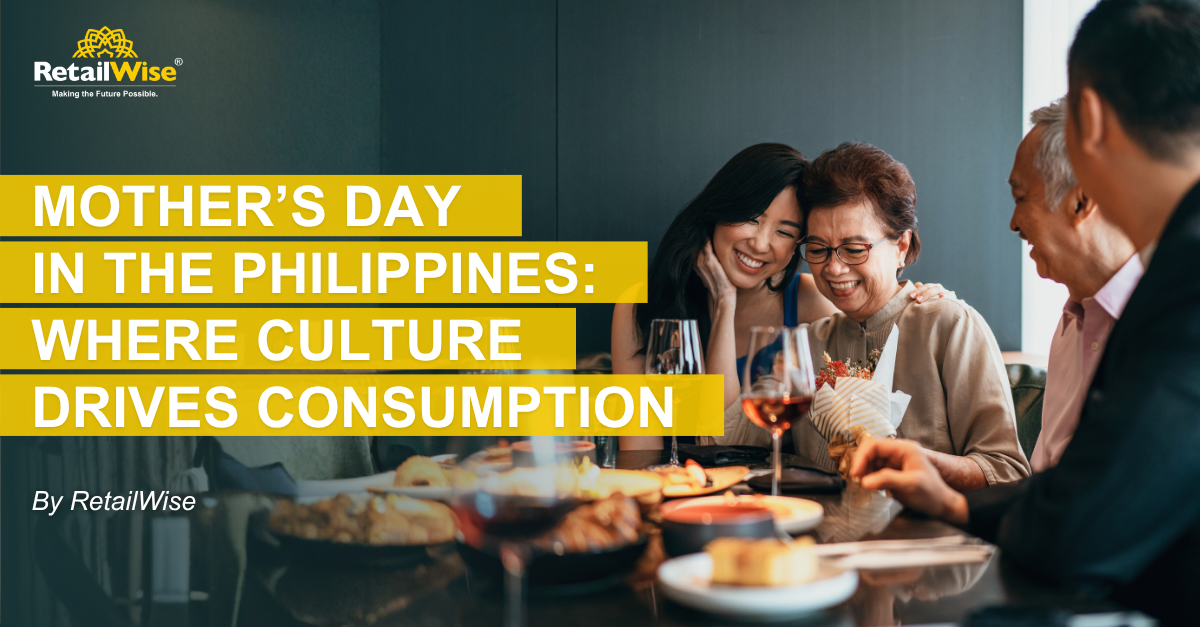
 

Mother’s Day in the Philippines: Where Culture Drives Consumption

In the Philippines, Mother’s Day is never just a date on the calendar. It feels closer to something lived than something scheduled—shaped by pagmamahal, a love that runs deep without needing explanation, and utang na loob, a debt of gratitude that can never truly be repaid—both sitting at the core of how Filipinos relate to their mothers.

A Filipino mother is rarely seen as “just” a parent. She is the ilaw ng tahanan—the light of the home. For many, she is the one who manages not only the household but also its emotional balance. She stretches the budget, holds the family together across distance and migration, and carries responsibilities that are often unspoken, yet deeply felt.

Because of this, Mother’s Day does not feel like an obligation. It feels like something you simply know you must do.

What makes it commercially powerful is how broadly the idea of “mother” is defined in Filipino culture. It is rarely limited to Nanay. It extends to Lola, Tita, Ninang—even to women who have, in our own ways, stepped into a maternal role. As a result, one person is often buying for multiple “mothers’ or coordinating with siblings to ensure no one is left out. Gifting becomes collective, layered, and emotionally charged, which naturally drives higher basket sizes and stronger purchase intent.

There is also a rhythm to the day that is distinctly Filipino and deeply faith-driven. For many families, it begins with Mass. What follows—lunch reservations, mall visits, and gift-giving—feels like a continuation of what is already meaningful. By the time consumers enter stores or open apps, they are not searching for a reason to spend. They are looking for the right way to express what they already feel.


How It All Started


The history of Mother’s Day in the Philippines is less linear than it appears. The earliest recorded celebration dates back to 1921, organized by the Ilocos Norte Federation of Women’s Clubs and held in December. Over time, the observance shifted—renamed, re-dated, and reshaped across different administrations.

At one point, it became “Parent’s Day”, reflecting a distinctly Filipino inclination to honor the family as a whole rather than separate roles. It was later divided again into Mother’s and Father’s Day, before being moved to the second Sunday of May to align with international practice.

In 1998, it was moved back to December through presidential proclamation. Legally, that remains the official date. Yet in practice, Filipinos continue to celebrate in May.

That contrast is telling. Mother’s Day in the Philippines is not sustained by policy, but by culture—carried forward by habit, memory, and shared emotion.


Who Is Buyingand Why It Matters


The primary buyer is the adult child, typically aged 18 to 45, purchasing for their mother—often alongside siblings who pool budgets to give something more meaningful. The shared-buying behavior is significant. It transforms a single purchase into a collective decision, often increasing both spend and intentionality.

A second key segment is husbands buying for wives who are mothers. Their choices tend to be experiential—spa treatments, dining experiences, and wellness packages—often framed less as material gifts and more as rest, recognition, and appreciation.

Across both groups, the motivation is rarely transactional. It is emotional, socially influenced, and often extends beyond a single recipient.


The Categories That Win


Food and dining remain at the center of Mother’s Day spending. Restaurants, bakeries, and catering brands consistently see one of their strongest peaks of the year. The real opportunity, however, often lies in the add-ons—cakes paired with meals, chocolates alongside flowers, or coffee gifts for mothers whose routines begin each morning with a cup. The most successful food brands are those that sell not just products, but shared moments.

Beauty and wellness have evolved from indulgence into a legitimate expression of care. Skincare sets, supplements, and wellness bundles are increasingly positioned as gestures of concern and affection rather than luxury. Platforms such as TikTok Shop and Shopee have further reinforced this shift through visibility, validation, and social proof.

Home appliances, while practical on the surface, carry strong emotional meaning in the Filipino context. An air fryer or multi-cooker is not just a household device, but a way of lightening the daily load of someone who has spent years taking care of others. It is both utility and appreciation.

Wellness experiences—spa days, salon visits, and vouchers—continue to gain relevance as more families recognize that one of the most meaningful gifts is time to rest.


What Retailers Should Know Entering May 2026


On Mother’s Day, emotion is not part of the purchase. It is the product
itself. The gift is simply the medium through which that emotion is expressed. The brands that perform best are not always the most visible, but those that help consumers feel they have chosen something genuinely meaningful.

Most purchase decisions happen between late April and the first week of May, when intent is strongest and comparison begins. A second, shorter surge occurs just before the day itself, driven by last-minute orders for food, flowers, and digital gifts.

Multi-recipient buying is also a defining behavior. Many Filipinos are purchasing for more than one maternal figure at the same time. Brands that acknowledge this through curated tiers or bundles reduce decision friction and naturally increase basket value.

Finally, geographic reach matters. Mother’s Day is celebrated with equal depth outside Metro Manila—in Cebu, Davao, Iloilo, and across provincial areas. Brands with reliable nationwide fulfillment do not just expand coverage; they access a significant parallel market that is often underserved.


The Analyst’s View


Retail occasions rise and fall with consumer confidence. Mother’s Day in the Philippines does not follow that pattern. It has endured policy shifts, economic cycles, and household budget pressures because it is not a constructed retail moment—it is a cultural expression of gratitude that has taken shape over generations.

The demand does not need to be created. It already exists.

The real question is whether brands are prepared to meet it in a way that feels worthy of the moment.


This article was produced by RetailWise. For retail strategy advisory and consumer insights on the Philippine market, contact info@retailwiseph.com


________________________________________________________________________________________________________________

Bringing value across different brands

At RetailWise, we are bringing value across different brands. We aim to ensure your satisfaction by guaranteeing the success of your business from strategy to execution. Explore our strategies, resources, and expertise and find the perfect fit for your needs click here

Follow us on our social media accounts! Facebook , IG , LinkedIn
 

In Focus: Spending Under Pressure (March 2026)

Inflation in the Philippines jumped to 4.1% in March 2026, a sharp increase from 2.4% the month before. What stands out isn’t just the rise, but how quickly it happened—especially after things seemed to be easing earlier in the year.

The increase is largely driven by essential categories—particularly transport, along with food and housing—making the impact more immediate and difficult for consumers to avoid, as these are non-negotiable expenses. With price increases concentrated in non-discretionary spending, households are not cutting back entirely but are instead losing flexibility in how they allocate their income.

Over time, this adds up. Money simply doesn’t go as far as it used to. Even if income hasn’t changed, what it can actually buy has shrunk. Using long term reference, ₱100 in 2018 now has the buying power of roughly ₱75 today. This leads to more subtle consumer adjustments— instead of big, visible cutbacks, the shift shows up in smaller, everyday decisions. This typically translates to buying fewer non-essential items, opting for smaller purchases, and becoming more price-conscious.

Labor market dynamics add another layer of pressure. While overall employment remains stable on paper, its composition has shifted. There has been a notable decline in wage and salary jobs, alongside a rise in self-employment and unpaid work. This shift toward more irregular income sources reduces income predictability and reinforces more cautious spending behavior.

These trends are already visible in retail. Consumers are still spending, but more selectively—waiting for promotions, switching brands, and focusing on value. Discount retailers are benefiting from this shift, while traditional supermarkets are experiencing slower growth despite steady foot traffic.

Overall, the environment reflects a shift toward more disciplined consumption. Demand remains present, but with less flexibility, making value, pricing, and format positioning increasingly critical for retail performance.


Download full article:
 https://web.tresorit.com/l/EPprA#yjXM3pQUIEqFn2CbRBOXAQ


________________________________________________________________________________________________________________

Bringing value across different brands

At RetailWise, we are bringing value across different brands. We aim to ensure your satisfaction by guaranteeing the success of your business from strategy to execution. Explore our strategies, resources, and expertise and find the perfect fit for your needs click here

Follow us on our social media accounts! Facebook , IG , LinkedIn
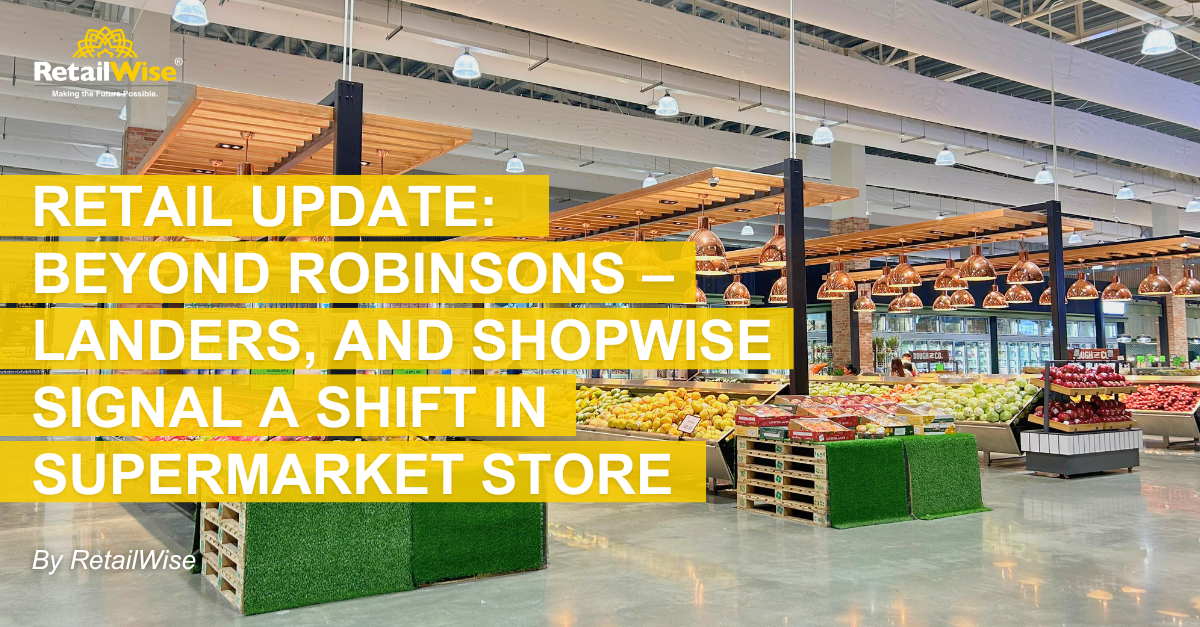
Retail Update: Beyond Robinsons – Landers, and Shopwise Signal a Shift in Supermarket Store Concepts

Following the recently reported revamp of Robinsons Supermarket Galleria, other supermarket operators have also introduced store developments in December 2025, including the opening of Landers Aseana and the relaunch of Shopwise Commonwealth. Together, these moves signal that transformation is underway across the Philippine grocery sector.

Major supermarket operators are rethinking store formats as consumer expectations shift toward convenience, experience, and multi-purpose retail environments.

At Robinsons Supermarket Galleria, the revamp reflects a move toward a wellness-led, experience-oriented supermarket format. The revamped store integrates dining areas, ready-to-eat sections, and curated selections of both local and international products. The branch also pilots a hybrid cashier system in which staff scan items while customers input cash into automated machines that dispense change—improving checkout efficiency while reducing shrinkage risks. The initiative forms part of Robinsons’ broader modernization program, which includes plans to renovate nine more supermarkets nationwide.


Other retailers are also upgrading their store concepts.


At Landers Aseana, the company’s 16th store, the warehouse club concept is further refined through improved store navigation, wider aisles, and a more structured merchandising layout. The branch benefits from its strategic location within a rapidly developing district surrounded by residential communities, offices, and entertainment hubs. The store features wider aisles, improved sightlines, and a more organized environment. Beyond bulk grocery retail, Landers strengthens its membership ecosystem through integrated services such as cafés, dining spaces, grooming services, and pharmacy offerings.


Meanwhile, Shopwise Commonwealth has also undergone a store relaunch, reflecting efforts to modernize the brand’s supermarket format. Shopwise currently operates 16 stores nationwide, with Robinsons Retail planning to introduce a large-format Shopwise “big-box” concept in Cainta, Rizal by 2027. The planned store will span approximately 7,000 square meters, introducing a warehouse-style format designed for high-volume merchandising. At present, Shopwise stores operate without a membership requirement, allowing shoppers to access a broad assortment of global and local products while maintaining the accessibility of a traditional supermarket.

Taken together, these developments point to a broader shift in the Philippine grocery sector: supermarkets are moving beyond purely transactional retail toward integrated store ecosystems that combine grocery shopping with dining, services, and everyday convenience.

For retailers, the direction is clear: supermarkets are no longer just places to replenish essentials—they are evolving into everyday lifestyle destinations designed to encourage longer store visits, deeper engagement, and higher basket sizes.

________________________________________________________________________________________________________________

Bringing value across different brands

At RetailWise, we are bringing value across different brands. We aim to ensure your satisfaction by guaranteeing the success of your business from strategy to execution. Explore our strategies, resources, and expertise and find the perfect fit for your needs click here

Follow us on our social media accounts! Facebook , IG , LinkedIn

DTI Tightens Watch on Prices of Basic Goods Amid Oil Price Surges

The Department of Trade and Industry (DTI) said it has intensified monitoring and enforcement efforts to keep prices of basic goods in check amid continued increases in global oil prices.

Trade Secretary Maria Cristina Aldeguer-Roque said the agency is banking on the commitment of manufacturers and retailers to hold off on price increases for basic necessities and prime commodities until at least April 16, with some items expected to remain stable until April 28.

Roque said the agreement was reached following consultations with industry players, as authorities moved to cushion the impact of rising fuel costs on consumers.

She added that most essential goods are covered by the arrangement, with several items maintaining current prices through the end of the month.

Weekly monitoring

Roque said the DTI will sustain close coordination with manufacturers and retailers as global market conditions remain volatile.

She said no agreement has been reached beyond the current timeline, but the agency will meet with stakeholders weekly or every two weeks given the unusual circumstances.

While there is no fixed cap on potential price adjustments, she said the goal is to keep any increases at a minimum.

Focus on enforcement

The DTI said monitoring and enforcement efforts are focused on supermarkets and grocery stores to ensure compliance with suggested retail prices.

Roque said inspections are being conducted in these establishments, where the agency has enforcement authority.

The agency also committed to promptly informing the public should any price adjustments occur.

Supply remains stable

Despite global pressures, the DTI said supply remains sufficient.

Roque said there are currently no issues on the supply side, even as oil prices continue to rise.

She added that government programs are in place to support small businesses, while economic activity remains steady, including trade events and online selling.


Original Articlehttps://www.gmanetwork.com/news/money/economy/981882/dti-tightens-watch-on-prices-of-basic-goods-amid-oil-price-surges/story/

________________________________________________________________________________________________________________

Bringing value across different brands

At RetailWise, we are bringing value across different brands. We aim to ensure your satisfaction by guaranteeing the success of your business from strategy to execution. Explore our strategies, resources, and expertise and find the perfect fit for your needs click here

Follow us on our social media accounts! Facebook , IG , LinkedIn



Jollibee Now Offers ‘Eat Now, Pay Later’ Option

Fast-food giant Jollibee Foods Corporation has introduced a new, more flexible way for customers to enjoy their favorite meals—paying later.

In partnership with Atome Philippines, the brand officially launched its “Eat Now, Pay Later” option at its Jollibee BGC Triangle Drive branch. The launch was led by Reynaldo Gabunada Jr., Head of Jollibee Philippines’ Regional Business Unit and National Key Accounts Group, and Christian Eugene Quiros, President and General Manager of Atome Philippines.

“EAT NOW, PAY LATER – pwede na sa Jollibee!”

With the new offering, customers can now use their Atome Card in more than 1,300 Jollibee stores nationwide and settle their payments up to 40 days later—with zero interest.

“Now, you can use your Atome Card in 1,300+ Jollibee stores nationwide and pay up to 40 days later, 0% interest.”

The move reflects a growing trend among retailers and service providers to adopt “buy now, pay later” solutions, giving consumers more flexibility in managing their expenses.

“Tara, Jollibee na, Atome cardholders! ”

As digital payment options continue to evolve, this partnership signals Jollibee’s push to make dining more convenient and accessible for its customers across the country.


Original article: https://www.advocatesomi.com/2026/jollibee-now-offers-eat-now-pay-later-option


________________________________________________________________________________________________________________

Bringing value across different brands

At RetailWise, we are bringing value across different brands. We aim to ensure your satisfaction by guaranteeing the success of your business from strategy to execution. Explore our strategies, resources, and expertise and find the perfect fit for your needs click here

Follow us on our social media accounts! Facebook , IG , LinkedIn
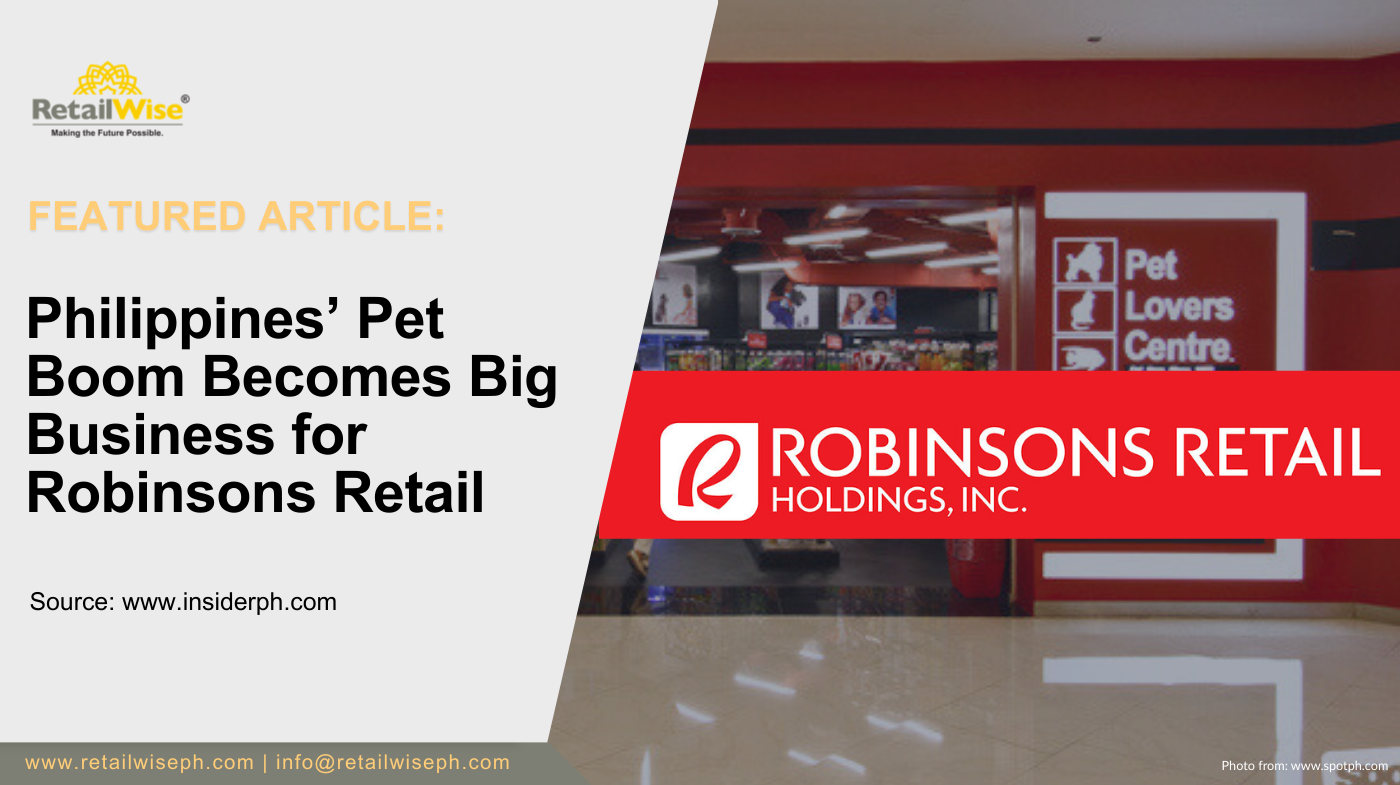
Philippines’ Pet Boom Becomes Big Business for Robinsons Retail

Southeast Asia’s most pet-obsessed market is becoming a growth engine for businesses, and the Gokongwei family-led Robinsons Retail Holdings Inc. is ready to cash in on the boom.

The listed retailer, which owns supermarkets, pharmacies and specialty brands, said households continue to cut back on non-essential spending—but not on their fur buddies.

“It’s an outlier,” Stanley Co, president and CEO of RRHI, told InsiderPH.

A recent Kantar Media study revealed that 94 percent of Filipino households owned a pet in 2024, which was the highest in Southeast Asia. Co said they’re seeing this in financial results as well.

“A sack of dog food is actually more expensive than a sack of rice,” Co said.

“They also spend on grooming and veterinary services,” he added.

Expansion push

RRHI is doubling down on the trend with plans to open five more branches of its Pet Lovers, which sells pet supplies and grooming and vet services in select branches.

This adds to their existing 12 branches.

Where store presence is limited, the firm will reach customers directly through mobile grooming, which is expected to be launched within 2026.

“We’re going to work with partners for this year,” Co explained.

Outlook and consumer trends

The broader business will continue to grow underpinned by essential spending.

“The non-discretionary, the supermarket, the drugstore, which is 80% of our business, we will continue to grow,” Co said.

He expects business to pick up especially moving into the second half of 2026.

“We’re cautiously optimistic,” he said.


Original Article: https://insiderph.com/philippines-pet-boom-becomes-big-business-for-robinsons-retail

________________________________________________________________________________________________________________

Bringing value across different brands

At RetailWise, we are bringing value across different brands. We aim to ensure your satisfaction by guaranteeing the success of your business from strategy to execution. Explore our strategies, resources, and expertise and find the perfect fit for your needs click here

Follow us on our social media accounts! Facebook , IG , LinkedIn