The Department of Trade and Industry (DTI) said it has intensified monitoring and enforcement efforts to keep prices of basic goods in check amid continued increases in global oil prices.
Trade Secretary Maria Cristina Aldeguer-Roque said the agency is banking on the commitment of manufacturers and retailers to hold off on price increases for basic necessities and prime commodities until at least April 16, with some items expected to remain stable until April 28.
Roque said the agreement was reached following consultations with industry players, as authorities moved to cushion the impact of rising fuel costs on consumers.
She added that most essential goods are covered by the arrangement, with several items maintaining current prices through the end of the month.
Weekly monitoring
Roque said the DTI will sustain close coordination with manufacturers and retailers as global market conditions remain volatile.
She said no agreement has been reached beyond the current timeline, but the agency will meet with stakeholders weekly or every two weeks given the unusual circumstances.
While there is no fixed cap on potential price adjustments, she said the goal is to keep any increases at a minimum.
Focus on enforcement
The DTI said monitoring and enforcement efforts are focused on supermarkets and grocery stores to ensure compliance with suggested retail prices.
Roque said inspections are being conducted in these establishments, where the agency has enforcement authority.
The agency also committed to promptly informing the public should any price adjustments occur.
Supply remains stable
Despite global pressures, the DTI said supply remains sufficient.
Roque said there are currently no issues on the supply side, even as oil prices continue to rise.
She added that government programs are in place to support small businesses, while economic activity remains steady, including trade events and online selling.
At RetailWise, we are bringing value across different brands. We aim to ensure your satisfaction by guaranteeing the success of your business from strategy to execution. Explore our strategies, resources, and expertise and find the perfect fit for your needs click here
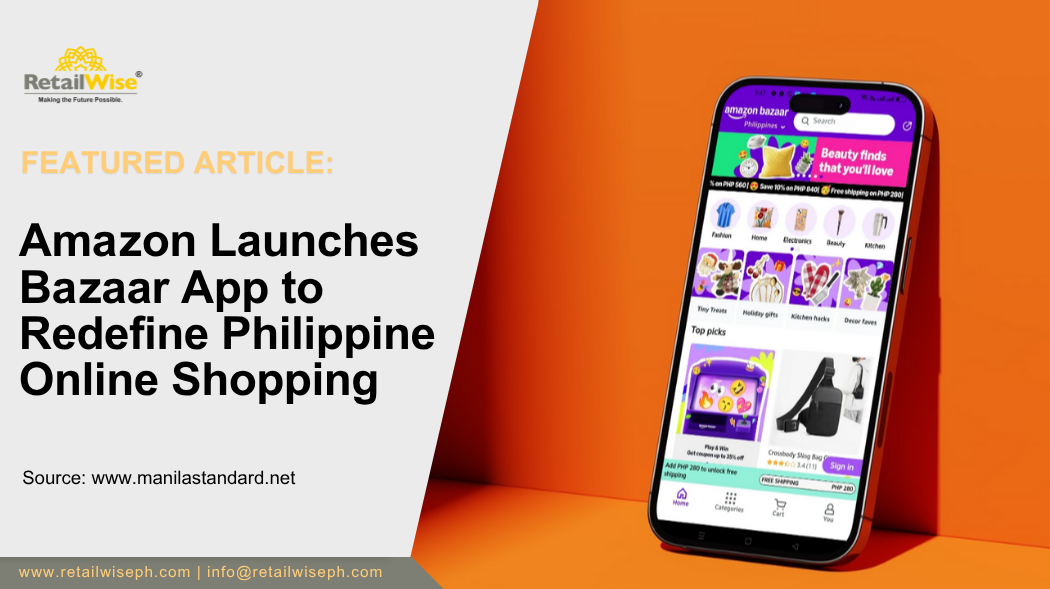
Amazon, the world’s largest online retailer, has launched the Amazon Bazaar app in the Philippines, offering a new shopping experience with hundreds of thousands of affordable products across fashion, home and lifestyle categories.
The new standalone app expands Amazon’s value-focused “haul” shopping experience to 14 countries.
Most items on Amazon Bazaar are priced under P600, with some starting at P120. New users receive 50 percent off their first order, and free delivery applies to purchases worth P280 or more.
Standard delivery takes two weeks or less, supported by Amazon’s 24/7 multilingual customer service.
The app brings the same ultra-low-price experience as Amazon Haul, tailored to local languages and cultures. Customers can sign in with existing Amazon credentials or create new accounts, enjoying Amazon’s trademark reliability, selection and convenience.
The launch in the Philippines is part of an expansion that includes Hong Kong, Taiwan, Kuwait, Qatar, Bahrain, Oman, Peru, Ecuador, Argentina, Costa Rica, the Dominican Republic, Jamaica and Nigeria.
Shoppers will find familiar Amazon features, including product reviews and star ratings. All listings undergo strict compliance checks to ensure safety and quality. Customers can return items for free within 15 days of receipt. The app also features interactive entertainment such as social lucky draws and exclusive promotions.
Amazon Bazaar supports six languages including English, Spanish, French, Portuguese, German and Traditional Chinese, and allows transactions in Philippine Peso using Visa, Mastercard or American Express. The app is now available for download on iOS and Android stores in the Philippines.
At RetailWise, we are bringing value across different brands. We aim to ensure your satisfaction by guaranteeing the success of your business from strategy to execution. Explore our strategies, resources, and expertise and find the perfect fit for your needs click here
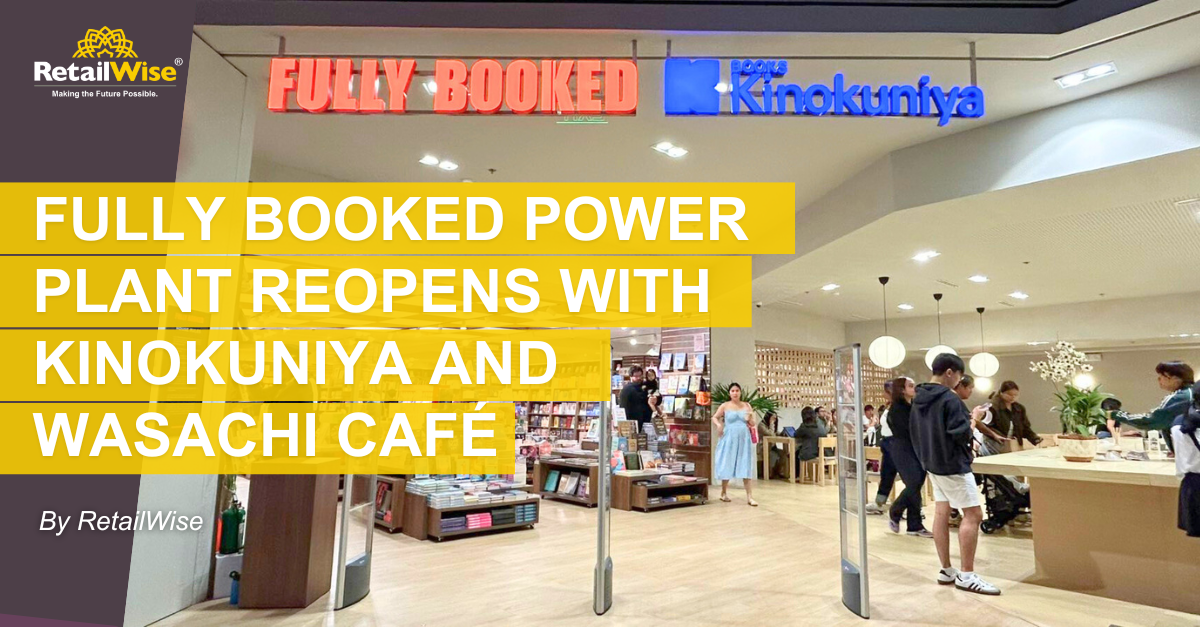
Book lovers, your next favorite destination is here — the newly reopened Fully Booked at Power Plant Mall!
Now beautifully reimagined as a collaborative store with Japan’s iconic bookseller Kinokuniya, the Fully Booked x Kinokuniya Power Plant Mall branch brings together the best of two literary worlds.
Fully Booked’s beloved collection of international titles now sits alongside Kinokuniya’s signature range of Japanese manga, literature, art books, and language learning materials—offering an experience that feels both familiar and refreshingly new.
Fully Booked Power Plant redefines what a modern literary space can be. It’s now a premium lifestyle destination, where culture, design, and experience come together to attract readers, families, professionals, and Gen Z shoppers alike.
Its merchandise mix stands out for its exclusive and carefully curated offerings. While priced slightly higher than traditional bookstores, the selection—ranging from limited-edition books and collectible toys to designer stationery and lifestyle accessories—reflects a refined and aspirational brand identity.
Adding to the charm is Wasachi Café, which fills the store with calm green hues and the earthy aroma of whisked tea. Professionals and young creatives drop by to work or unwind, while families and friends find it a cozy space to reconnect. Its premium ambiance fits perfectly within Power Plant Mall—a high-end retail destination loved by those who appreciate quality, calm, and inspiration.
At RetailWise, we are bringing value across different brands. We aim to ensure your satisfaction by guaranteeing the success of your business from strategy to execution. Explore our strategies, resources, and expertise and find the perfect fit for your needs click here
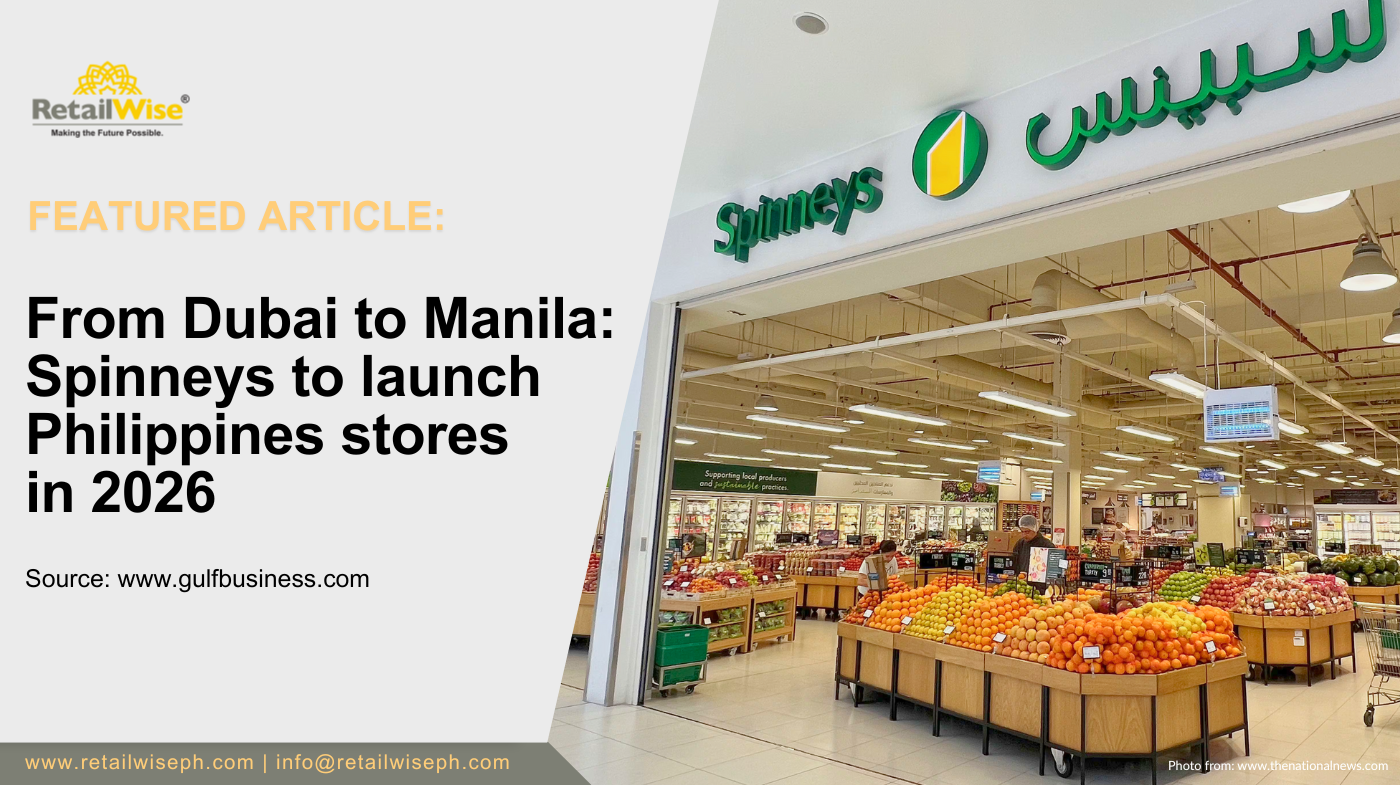
After its Riyadh debut last year, the UAE grocer is teaming with Ayala Corporation to open its first stores in the Philippines, marking its maiden step into Southeast Asia.
Spinneys, which first opened its doors in Dubai’s Al Nasr Square in 1961, is now set to expand into Southeast Asia.
The UAE-based premium grocer has signed a joint venture with conglomerate Ayala Corporation to launch a series of supermarkets in the Philippines, marking a new chapter in its international growth story.
Under the agreement, Ayala will hold a 60 per cent stake and Spinneys a 40 per cent. The first store is scheduled to open in the fourth quarter of 2026, with a pipeline of further outlets to follow. The joint venture will adopt a two-phased approach: Spinneys will initially support the venture with operational expertise before handing over day-to-day management to the new entity.
The move builds on Spinneys’ regional momentum. In June 2024, it opened its first Riyadh store in the upscale An Nuzha district, with plans to launch as many as 12 outlets across Saudi Arabia by 2028.
This year, the retailer also announced plans to expand into Kuwait alongside opening ten new stores in the UAE.
Sunil Kumar, CEO of Spinneys, said the Philippines offered the right fundamentals for the brand’s first step outside the GCC.
“The Philippines offers significant long-term growth potential, with strong economic fundamentals, a growing affluent population, and increasing demand for high-quality offerings,” he said.
“Our partnership with Ayala combines its deep local knowledge with our operational expertise, providing a strong foundation to grow in a measured way. As we enter this next phase, we’re delighted to be bringing our high-quality and fresh offering to a new region.”
Ayala, one of the Philippines’ oldest and largest conglomerates, has a diverse presence across real estate, banking, telecommunications, energy, and logistics. The group has been expanding its retail footprint by partnering with global brands.
“We are honoured to be the first partner of Spinneys as it ventures outside the GCC,” said Cezar P. Consing, president and CEO of Ayala Corporation.
“We hope this investment will catalyse trade and investment between the Philippines and the GCC.”
The tie-up aims to blend Ayala’s access to prime sites in mixed-use developments with Spinneys’ expertise in premium fresh food retailing. The Philippine market, with its expanding middle and upper-income classes, is seeing rising demand for modern, high-quality retail experiences, making it a strategic entry point for the brand.
Spinneys currently operates over 80 outlets across the UAE, Oman, and Saudi Arabia (including Waitrose stores), and has become synonymous with quality produce. Its 2024 IPO on the Dubai Financial Market raised Dhs1.4bn, fuelling an expansion drive that now stretches beyond the Gulf.
At RetailWise, we are bringing value across different brands. We aim to ensure your satisfaction by guaranteeing the success of your business from strategy to execution. Explore our strategies, resources, and expertise and find the perfect fit for your needs click here
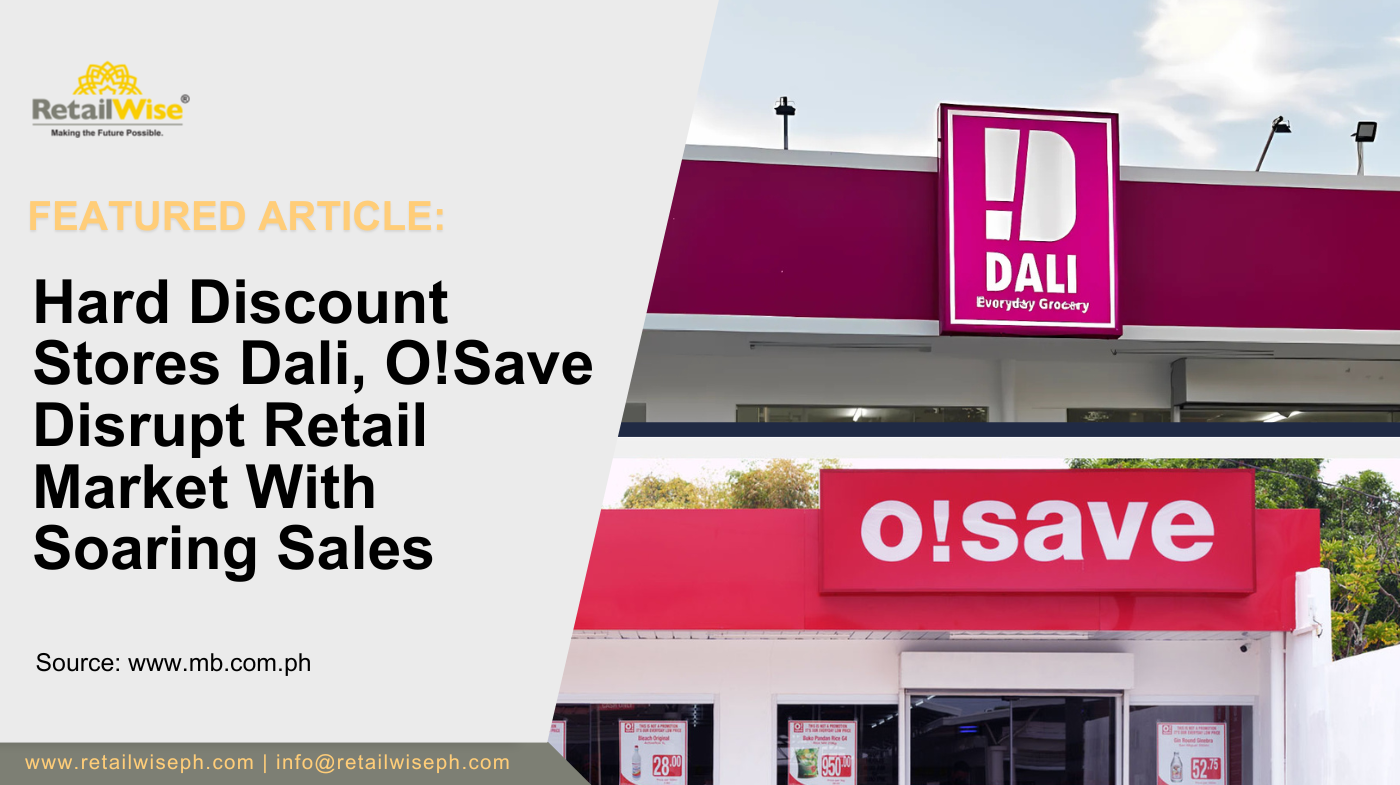
Hard discount stores Dali and Robinsons Retail Holdings Inc.’s affiliate, O!Save, are giving stiff competition to traditional supermarket and convenience store chains by registering strong sales growth while expanding their reach in the retail market.
Based on research by Abacus Securities Corp., sales of Dali jumped 57 percent to ₱34.1 billion in 2024 from ₱21.8 billion in 2023, while O!Save’s annual sales surged 134.6 percent to ₱13.6 billion last year from ₱5.8 billion in 2023.
“Clearly, these two are at least partly responsible for the lackluster earnings growth of its much larger competitors in the past few years,” added Abacus.
The brokerage noted the “significant inroads hard discounters have made in the local market with Dali leapfrogging MRSGI (Metro Retail Stores Group Inc.) in terms of revenues last year.”
MRSGI posted a 4.9 percent sales growth to ₱28.6 billion last year, lower than Dali’s ₱34.1 billion, when it was higher at ₱27.2 billion compared to Dali’s ₱21.8 billion in 2023.
Other major grocery retail chains also posted single digit sales growth last year with SM Food (including Alfamart) rising eight percent to ₱252.9 million from ₱234.2 million, Puregold Price Club (excluding S&R Membership Shopping) up by 8.3 percent to ₱144.9 billion from ₱133.8 billion, and RRHI Supermarkets with a 4.7 percent hike to ₱120.3 billion from ₱114.9 billion.
Only Philippine Seven Corporation, the local franchisee of 7-Eleven convenience stores, posted double-digit revenue growth of 13.8 percent to ₱90.11 billion last year, up from ₱79.19 billion in 2023.
However, Dali has yet a long fight ahead of it, and doubts have been raised on its continued viability since it has yet to break even, much less turn a profit.
Despite growing revenues by 52 percent to $595 million, Dali’s net loss last year increased five percent to $33 million, liabilities jumped 111 percent to $355 million, and equity shrank 73 percent to under $13 million.
“Management expressed confidence margins will turn around, but if Dali eventually does fold, it will be a significant positive for retailers PGOLD, RRHI, SM Retail, and MRSGI… So keep your ears on the ground for any news on Dali’s fate over the next six to 12 months,” said Abacus.
PhilSeven Operations Director Francis S. Medina said last August that the company is getting stiff competition from hard discount stores, which are “opening left and right.
“Yes, they are a threat. On the perspective of site acquisition, they practically open on the same areas where we want to open” so they compete one site bidding, said Medina noting that, “At the same time, they focus mainly on residential clusters, which we are also going into.”
However, he said they have an advantage over hard discount stores since not all of them operate 24 hours “so it’s a big plus for 7-Eleven since most of them open at 6 am and close at 10 pm, while we are open 24 (hours).
“Second big advantage is we serve fast food, which most of them don’t have. Third is we have dining spaces, so this gives customers more options. They can sit down while shopping.”
Amid this challenging environment, medina said “our objective is to acquire most of the best sites as soon as possible to prevent or make it difficult for any competition.”
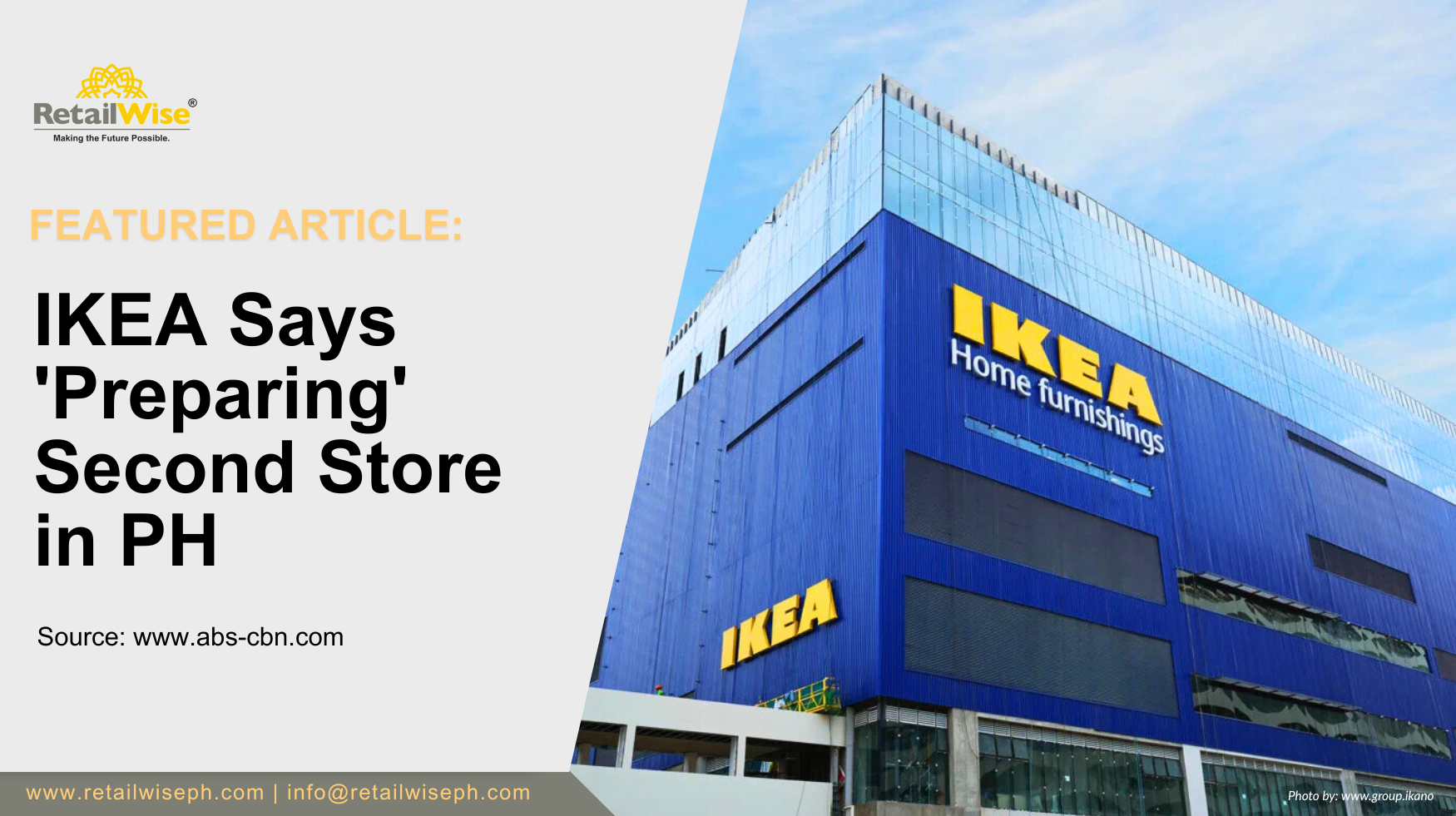
MANILA — IKEA Philippines will open a second branch in the country, but is not yet ready to disclose the location of the new store.
But the company confirmed it is indeed happening soon due to the success of its first Philippine store in Pasay.
IKEA Philippines Country Retail Manager Ricardo Pinheiro said the location would still be in Metro Manila. He added that its online store remains open and is available for delivery nationwide.
“Due to the success of the first store, we are now preparing the second store in the Philippines. I cannot tell you now, but I know very soon you will get that information,” Pinheiro said.
Pinheiro added that the Pasay store is not only the biggest IKEA store in the world, but also the store with the most products sold. He said they are now excited to expand operations in the Philippines because of the Filipinos’ support of their products.
“After only 3 and a half years, almost 4 years, our Pasay City store and our website have become successful in the IKEA world, that we have almost now been pressured to continue to develop the brand in the country since Filipinos love us,” he said.
He revealed there is also a plan to further reduce prices of almost all its products in the country this year.
“Last year in September, we decreased the price of more than 2,000 products. This is our way of doing things. We want to decrease prices to make the range more affordable to Filipinos. But I can tell you very, very soon, I will say in a month, two month’s time— we will again bring the prices further down,” he said.
IKEA has launched a pop-up exhibit at a mall in Quezon City. It launched the Stockholm 2025 collection featuring various pieces from furniture, dinnerware, mirrors, and more.
“Scandinavian classic style, very close also to our roots, where the quality, where the choice of the materials, where the functionality, the sustainability come together in a nice way,” Pinheiro said.
When asked if the new IKEA store will be in Quezon City because the pop-up exhibit was in a mall in the city, Pinheiro said they will have more pop-up exhibits in various parts of Metro Manila in the coming weeks and months. This will be their strategy before announcing where the second brand will be.
Private labels first captured my attention as a child in the 70s during a visit to Cora, the newest hypermarket near my hometown in northern France. Amidst the bustling aisles filled with colorful packages, I was drawn to a section showcasing “white products” – merchandise packaged in plain, minimalistic white without branding. The store-brand products communicated their value clearly: unbranded and low-priced. This early encounter with private labels, offering significant savings despite their lack of flashy branding, piqued my ongoing interest in private labels as I journeyed into retail.
Key Insights in Private Label Development
When I began my retail career in 1988 at Auchan in France, private labels were quite different from what we see today. Back then, their packaging often mimicked that of leading brands to the point where it could confuse customers, despite private labels being priced about 20% lower.
From those early experiences, I picked up three key insights:
Identify the top brands in your category to effectively position your private label.
Set your private label’s price 20% lower than the leading brands to attract price-sensitive customers.
Ensure your private label offers a margin that is 15 to 20% higher than the category leader to ensure profitability.
A decade later, at Monoprix-Prisunic, I encountered the concept of exclusive premium retail brands – high-quality products that resonated with customers and helped differentiate the retailer.
In the Middle East with Carrefour, I faced the challenge of launching private labels in a market dominated by established international brands. Despite Carrefour’s global reach, our progress was slower than expected due to limited initial volumes.
At Aswaaq, the challenge was even greater as we had to develop a private label before the first supermarket had even opened, with minimal volumes to start. We chose to focus on ten basic commodities, targeting the low-price segment with a distinctive brand name.
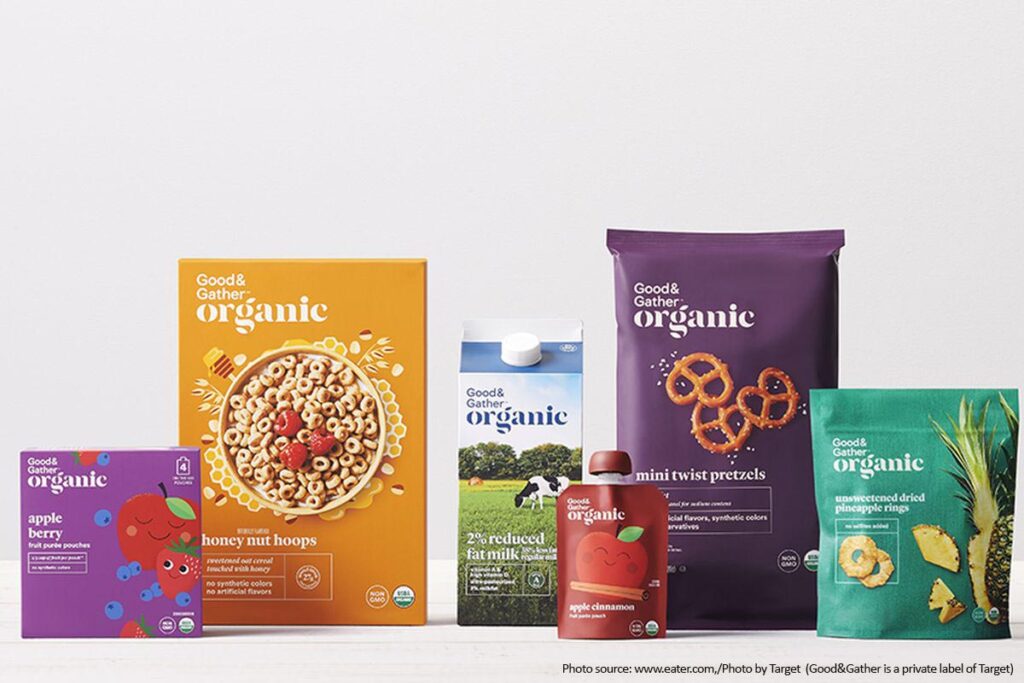
Since moving to the Philippines in 2011, I have had three key experiences developing or enhancing private labels. Although private label sales remain relatively low at below 5% share of sales compared to Europe, which has a 30% to 40% share of sales, or the US, with a 25% share of sales, the rise of hard discounters like Dali and O!Save, and the “No Brand” concept with strong private label strategies, has pushed local retailers to reassess their approaches to private label development.
Key Fundamentals of Private Label Development and Implementation
From my extensive experience in retail, I have learned that private label development serves three key purposes: strengthening branding, enhancing customer loyalty through unique products, and increasing profitability. Achieving these objectives relies on a meticulous step-by-step process, where each phase is critical. Missing even one step can compromise margins, affect targets, lead to flawed product development, and impact cost management efforts.
To attain success in private label development, attention must be given to several key aspects, from initial development to final implementation. These include:
Negotiating Costs: Start by focusing on fast-moving items. By leveraging high volumes, you can negotiate better deals and reduce costs effectively.
Defining Specifications: Ensure that your product specifications are clearly outlined and at par with the quality of national brands. This like-for-like comparison will build credibility in the market, demonstrating that your product meets top standards and that quality is never compromised.
Market Research: Take time to understand your competitors’ private label strategies and pricing. This insight will inform your own strategy and pricing decisions.
Sourcing Manufacturers: Evaluate both local and international manufacturers to secure competitive pricing without compromising on quality. It is crucial to balance high standards with cost efficiency to achieve success. Leading retailers often source their private labels globally to optimize both quality and cost.
Pricing Strategy: Ensure that the product’s cost price allows for a retail price difference of 15 to 20% compared to category leaders, along with an additional 15 to 20% margin. This principle has consistently guided me in scaling private labels effectively.
Contract Management: Establish contracts with manufacturers that cover volume requirements, pricing, lead times, product and packaging specifications, and penalty clauses for non-compliance. Regularly reviewing and adjusting these terms helps you stay agile and responsive to market changes.
Quality Control: Continuously monitor the quality of your private label products. Implement stringent quality control processes to uphold product standards. I recommend using a third party for random quality checks to ensure adherence to the agreed-upon standards with the manufacturer.
Brand Strategy: Deciding whether to use an existing brand name or create a new one significantly impacts your overall brand identity. Regardless of the choice, the brand will reflect the company’s value proposition and influence its reputation. Ensuring high-quality products is essential for strengthening brand identity.
Legal Compliance: Make sure you comply with all legal requirements and secure exclusivity for your brand name. This protects your brand and ensures regulatory compliance.
Packaging: Designing packaging that enhances the perceived quality of your product and meets legal standards is something I have learned to prioritize. Effective packaging can make a big difference.
Tiered Pricing: Develop private labels for various price segments – low, mid, and premium. Assign distinct brand names to each segment to appeal to different customer demographics. For the low and premium segments, creating specific brand names is especially effective.
In-Store Display: Allocate adequate shelf space for your private labels and position them at eye level. Proper placement can significantly boost visibility and sales.
Promotion: Plan regular promotions through catalogs, online channels, and social media. Utilize loyalty programs to encourage repeat purchases.
Price Monitoring: Regularly review and adjust prices to remain competitive. Periodically renegotiate costs with manufacturers to keep your pricing strategy effective.
Supplier Partnership: View your private label suppliers as partners. Regularly review their performance to address issues like quality and pricing, and use customer feedback to drive continuous improvement.
Fresh Food Quality: For fresh food and perishable items, maintaining consistent quality and safety is crucial. Your brand must be associated with reliable and high standards to avoid any perception of inconsistency or poor quality.
Supply Chain Management: Efficiently manage your supply chain to prevent disruptions. Streamline processes to ensure timely and reliable product availability.
Sales Monitoring: Regularly assess the sales performance of your private labels within their categories. Set targets for the next 3 to 5 years. For categories with limited or no brand presence, aim to achieve up to 75% sales contribution for your private label.
Customer Feedback: Collect feedback through surveys, focus groups, and blind testing to refine your products. Use this input to make improvements and better align with customer needs.
In summary, a well-executed private label strategy can greatly enhance a retailer’s brand, profitability, and customer loyalty. Achieving this requires a comprehensive approach that includes in-depth market research, strategic partnerships, innovative product development, effective marketing, and rigorous quality control.
In the current Philippine retail landscape, despite the presence of dominant international and strong local brands, strengthening private labels remains an opportunity for retailers to enhance their commercial offerings and reflect their company’s size and capability. Furthermore, a stronger market share in sales would significantly impact their economic model.
Reflecting on my early encounter with “white products” at Cora in the 70s, it is evident how far the concept of private labels has evolved. What started as a curiosity about cost-effective, unbranded merchandise has become a cornerstone of my strategic approach to private labels, helping retailers achieve success.
I hope these insights inspire you to fully embrace the potential of private labels in your own retail journey.
Postscript: For those looking to advance their private label strategy, consulting Philippe Devismes is highly recommended. As a mentor during the development of Aswaaq’s private labels, Philippe’s expertise and attention to detail offer invaluable guidance. His insights can help retailers effectively leverage private labels to enhance their market position and drive sustained success. Connect with Philippe on LinkedIn for more information.