JUST HOW CONVENIENT ARE JAPAN’S CONVENIENCE STORES?

When people talk about convenience and quality of services, we can definitely give it to the Japanese people. They know the value of not just money, but also people’s time. That’s why convenience stores or “konbini” as what it is locally referred to definitely takes our definition of a “one-stop shop” to a whole new level.

More than 50,000 convenience stores can be found in Japan. Every street corner even to the most provincial places has convenience stores. It’s where people usually go to purchase their food or simply to have coffee and have a rest from the cold outside. There is a fierce competition among major convenience stores operators in Japan such as 7/11, Family Mart and Lawson. This competition enables them to come up with innovations and creations of products to make the experience truly convenient for their consumers.

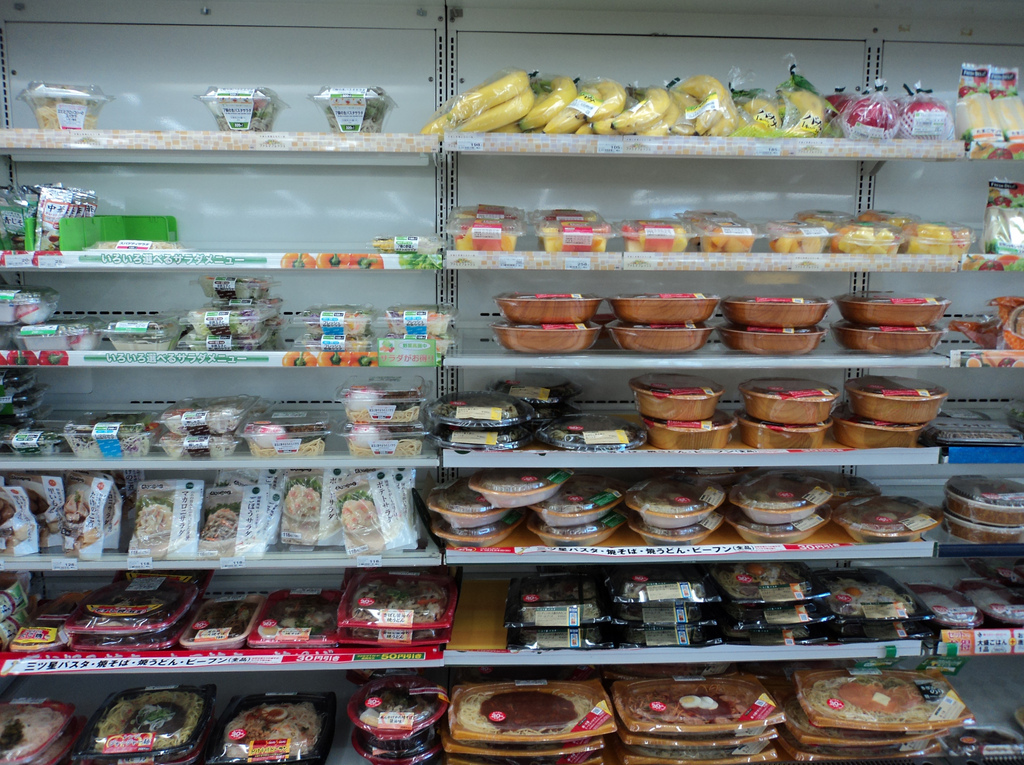
Each store has a wide variety of ready to eat food. For most Japanese people who just wants to grab something to eat because of their busy schedule, convenience store is definitely the place where they go to. Besides the fact that it’s a fast purchase, ready to eat food in convenience stores doesn’t lack the quality and good taste other restaurants also offer. Though most foods offered are Japanese, there are also Western food like pasta and sandwiches that can be purchased. The store clerk will always offer to reheat the food.

Other items such as cold beverage, ice creams, packed biscuits and snacks, alcoholic beverage and other food items can be found in convenience stores. These products also change depending on the season.

Besides food items, personal care products, cosmetics, batteries and other basic necessities can also be bought inside the convenience stores. Books, manga series, newspapers, magazines, and umbrellas are also available.

It’s hard to hail a cab on some places in Japan, most especially outside city centers. That’s why most convenient stores in these areas have a phone that a person can use to call a cab. Aside from this, these convenience stores also have public restrooms that people can use.

ATM Machines can also be found inside the convenience stores. Besides the banks, people go to convenience stores to withdraw their money from their ATM Cards. Branches of 7/11 have ATM Machines where international ATMs such as visa and mastercard can be accepted and used to dispense Japanese yen.
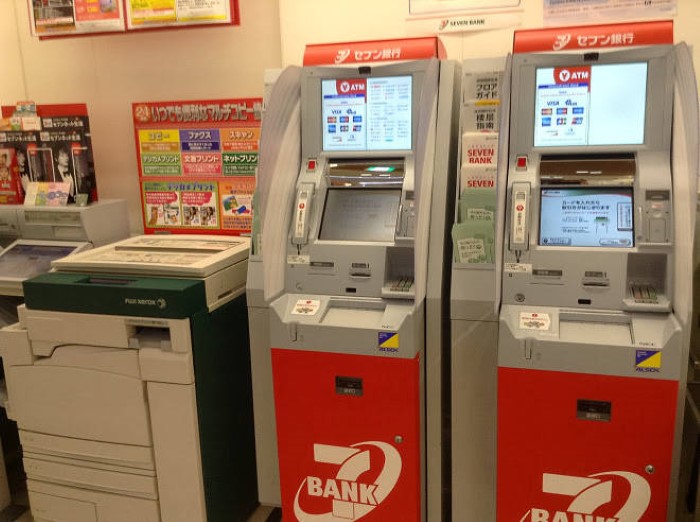
ATM Machines found on 7/11 stores

Multi-copy machines can also be used inside the convenience stores. But instead of the typical photocopier, they can also be utilized to send fax mails, print digital pictures and print documents from flash drives.
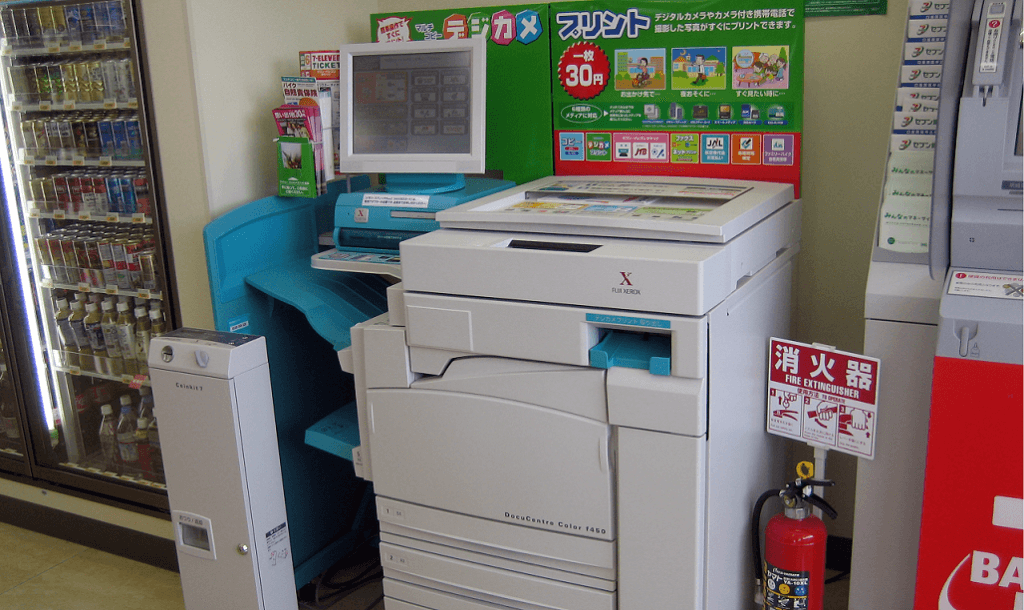
multi-copy-machine
Example of Multi-Copy Machine found on convenience stores

Another innovative machine found on Japanese Convenience stores is what they call the Loppi Machines. These red-colored machines can be used to buy tickets on various events in Japan such as concerts, sports, theme parks or even travel services. Once the machine dispensed the ticket, it can be paid directly to the counters. Besides tickets, the multi-purpose machine can also be used to confirm purchases made online or simply for bills payment (i.e. utility bills, insurance bills, cellphone bills). Loppi Machines make payments very easy as it can be made in many convenience stores. However, some machines don’t have an English Interface making it hard for foreigners to operate. Despite this, one can always ask assistance from the store clerk and they would be more than willing to help.
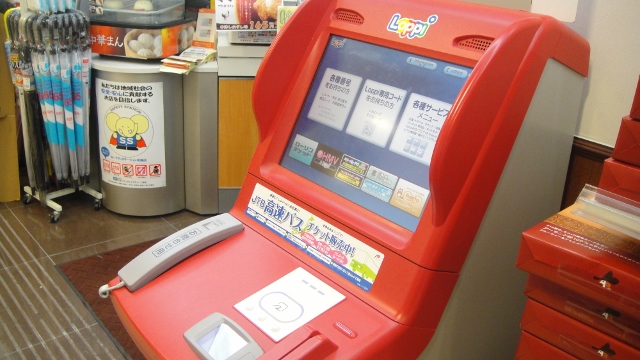
loppi-machine
Example of Loppi Machine

Finally, as most public places in Japan, convenience stores also offer free wifi access for a limited number of hours. For people passing by who need a drink and a place to rest, specifically tourist who also need the internet for directions, the stores’ free wifi access is truly convenient.

Japanese convenience stores truly offer its consumers not just good quality of purchases but also a worthy shopping experience. It redefines “convenience” to a level where consumers will not just find it easy to shop, but also to transact on most day to day necessary services. These stores, despite their size and assortment, would really come in handy for people, Japanese and Foreigners alike.
FRUITS SOLD LIKE JEWELRIES: A LOOK INSIDE JAPAN’S SEMBIKIYA FRUIT EMPORIUM

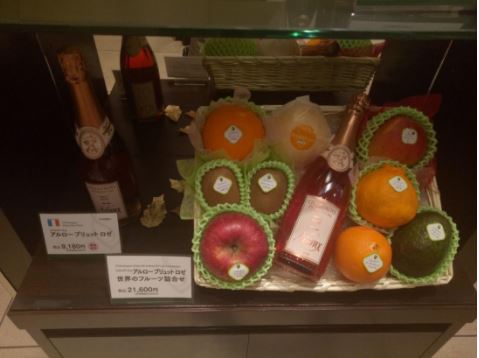
If you’re looking for perfectly shaped and delicious cantaloupes, strawberries, apples, grapes, and other Japanese fruits, Sembikiya is the best place to look for them. But you might have to check your wallet first because fruits here are not as cheap as you thought.

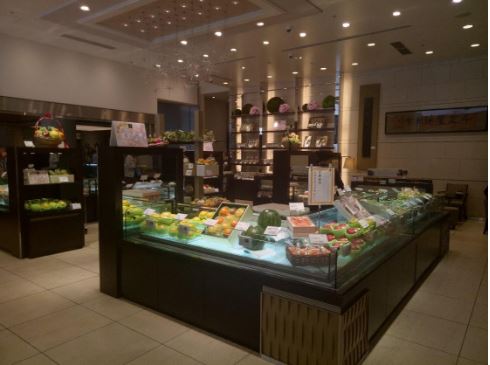
Sembikiya Fruit Emporium located in Tokyo is Japan’s most expensive fruit parlor.  The parlor looks like a luxurious jewelry shop at first glance, until you see fruits displayed instead of diamonds and golds in their glass counters.

Being abundant in fruits, Japan considered it as a customary luxury gift through ages. Contrary to a regular supermarket, fruits sold in Sembikiya are usually bought as gifts.

The fruit parlor started in 1834 as a small discount fruit shop owned by a Samurai called Benzo Ohshima. The business passed on for different generation in their family until it evolved into a more sophisticated and expensive fruit parlor. Despite the high prices of the fruits, Sembikiya Fruit Emporium is a booming business in Japan establishing different branches throughout the country. One of which, is their flagship branch in Nihonbashi Mistui Tower.

sembikiya-fruit
Sembikiya Fruit Emporium located in Nihonbashi Mitsui Tower, Tokyo

One common question asked: what makes the fruits so expensive?

musk-melon
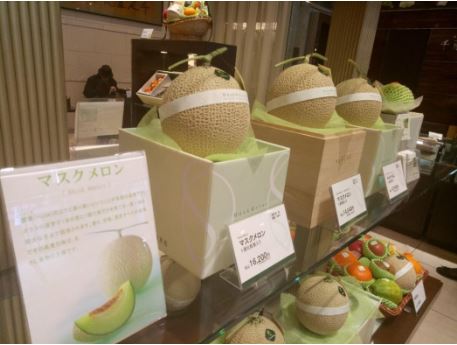
One single musk melon costs 16, 200 yen or roughly 142 USD
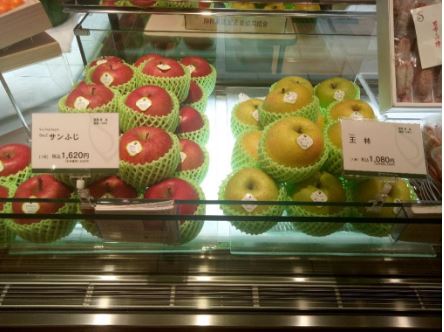
These apples are considered to be one of the cheapest fruits sold in Sembikiya, ranging from 1,080 yen to 1,620 yen per piece

For one obvious reason, the fruits sold in the place are impeccably tasty. The secret was on how they grow these fruits. The fruits in Sembikiya are cultivated in their specially-designed greenhouses located in Shizouka prefecture, the warmest place in Japan. These greenhouses control the temperature, using heaters during winter and air conditioning on summer season. Their fruits are also protected with a hat to make sure that they won’t be sunburned in heat, assuring its perfect shape, color and taste.

Each tree bears only one fruit to make sure that all the vitamins and nutrients will be received by the single fruit. All other fruits that will not pass their standards will be eliminated and picked out early on.

If someone is looking for something sweet besides fresh fruits, Sembikiya also offers other sweet products like fruit jams that were manufactured in their own factories.

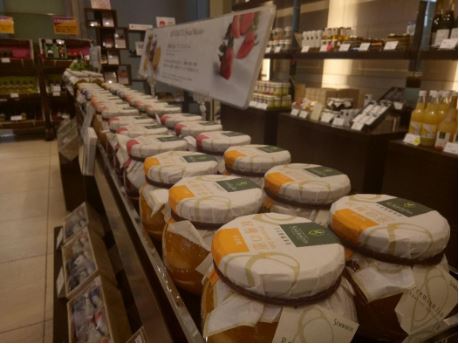
A fruit jam will cost 2,160 yen or roughly 19 USD per jar

Besides the amazing quality of their products, the store clerks also give their buyers an amazing experience. As an example, their store clerk will usually ask the day that the buyer intends to consume the fruit to make sure that the fruit picked would be at its best condition for the chosen date.

Sembikiya Fruit Emporium clearly depicts what the Japanese people had been known most notably for years: excellent quality of goods prepared with dedication and good accommodation for their customers.

ECOMMERCE ANALYSIS IN THE PHILIPPINES

In recent years, Filipinos` love for shopping has poured out to the online world as more and more Filipinos are starting to accept e-commerce. Their being one of the most active online users for online research and social media activities paved the way to the sudden hype of online store openings over the past few years. Online stores became the most convenient alternative to shopping.

EuroAsia Research Experts looked into the various factors about e-commerce in the Philippines such as the market trends, payment methods, e-commerce customers, main players, challenges and success stories, in order to learn more about the opportunities in this emerging industry.

You can download the FREE report below.

PDF

DOWNLOAD eCOMMERCE ANALYSIS eBOOK NOW

PRICE SURVEY REPORT – APRIL

Price Survey

Taguig – BGC Area, Philippines

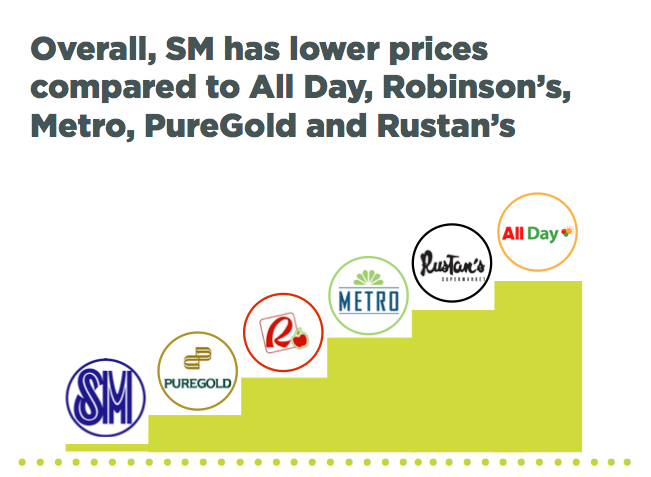
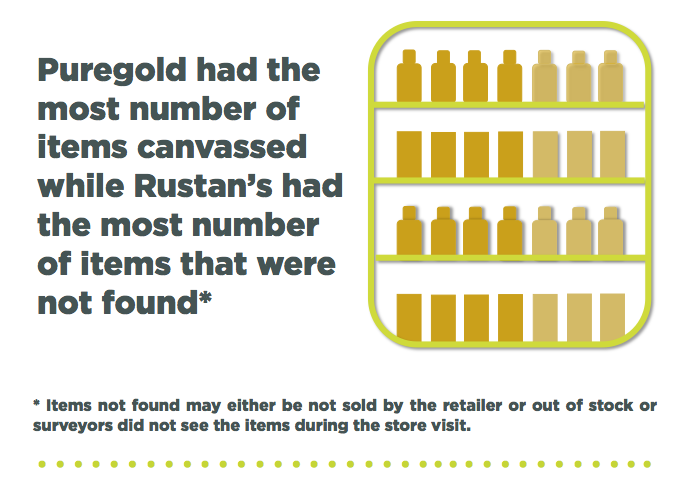
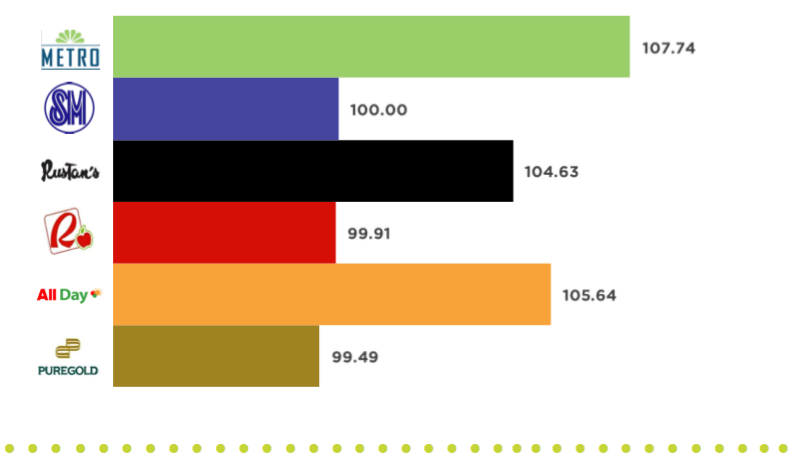
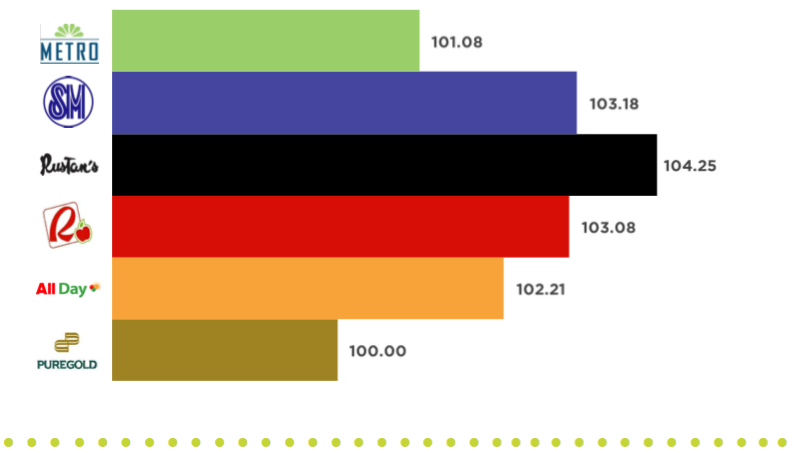
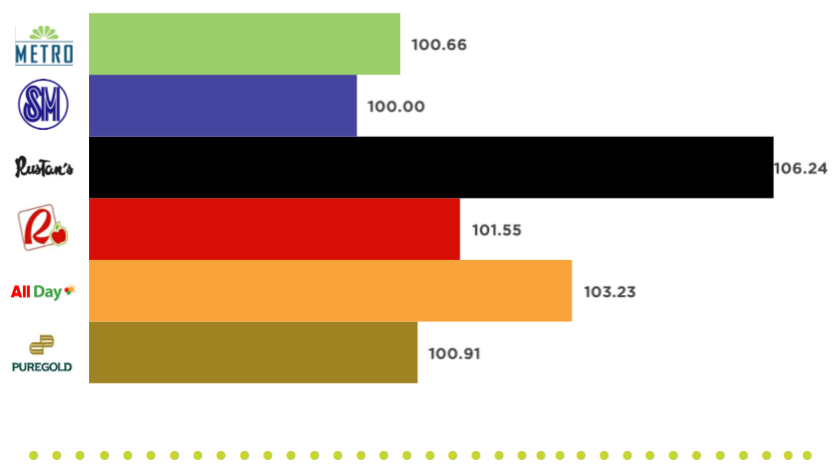
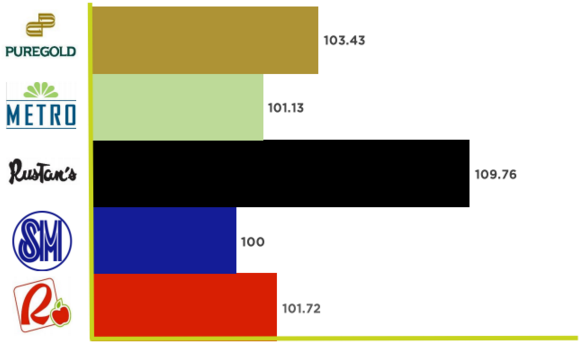
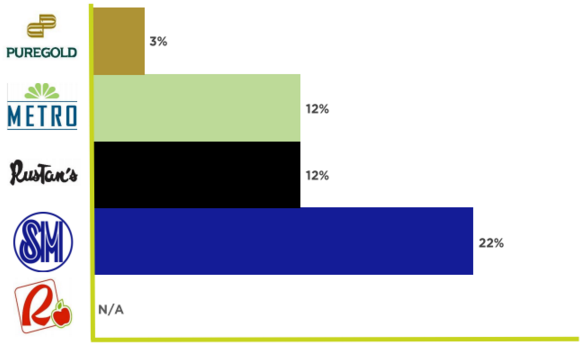
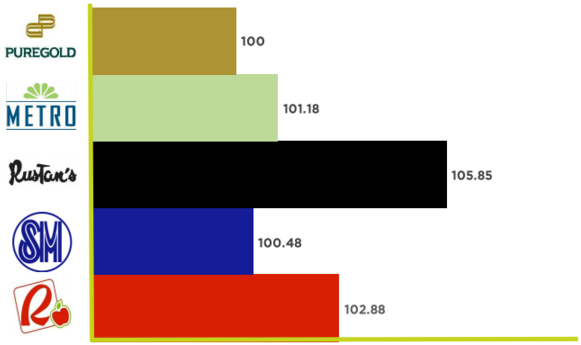
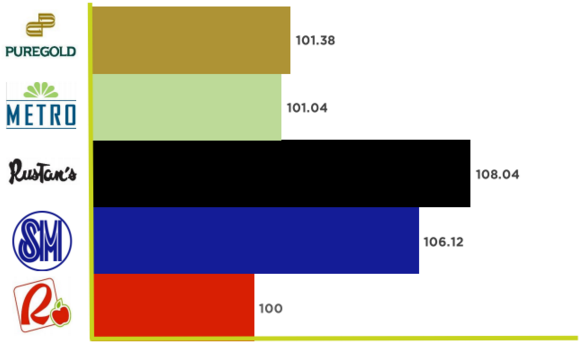
Euroasia Research Experts conducted a second price survey among 6 major retailers in the Taguig-BGC Area last April 7 and 14, 2016. All 113 items canvassed were bought from the different supermarkets.

Euroasia Research Experts also conducted a price survey last March among major retailers in Ortigas. For more info you may go check the data by going to this link — https://euroasiaresearchexperts.com/news/price-survey-report/

Disclaimer: Euroasia Research Experts does not endorse any product/brand/retailer. This exercise was conducted purely for research purposes.

PSR-April-graph
PSR-April-most-number-img

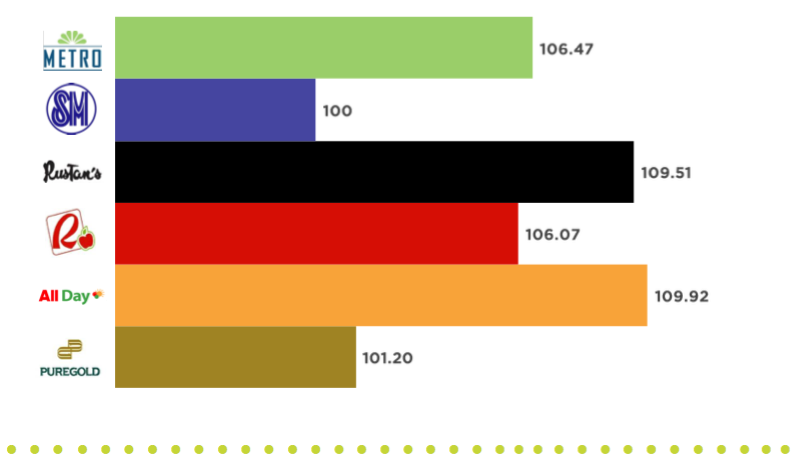
Price Index Average

Price index-a normalized average of price relative for a given class of goods or services in a given region, during a given interval of time.

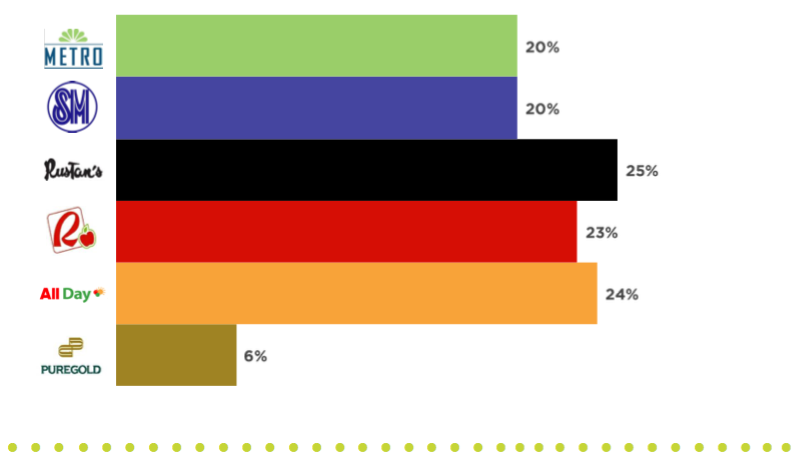
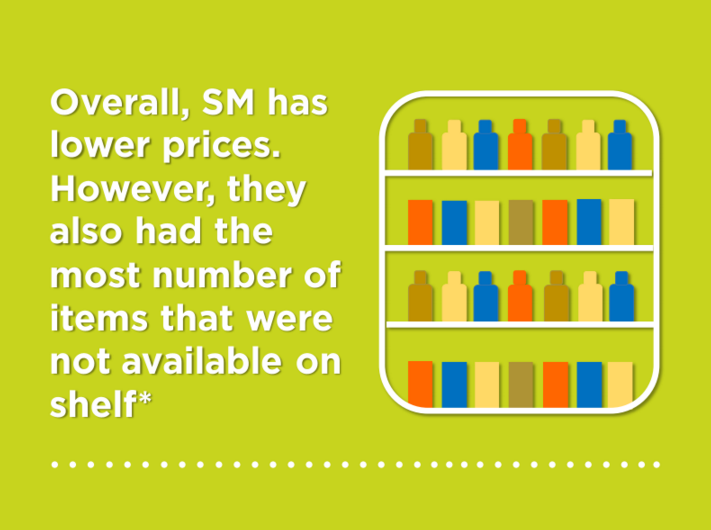
% of items not available on shelf

*Not found- Items that were not found during the store visit, products can either be out of stock or not carried by the retailer.

PSR-April-percent-of-items

Price Index – Fresh Items

Note: Fresh items were canvassed on April 7, 2016.

PSR-April-fresh-items

Price Index – Food Items

Price Index – Beverages

PSR-April-beverages

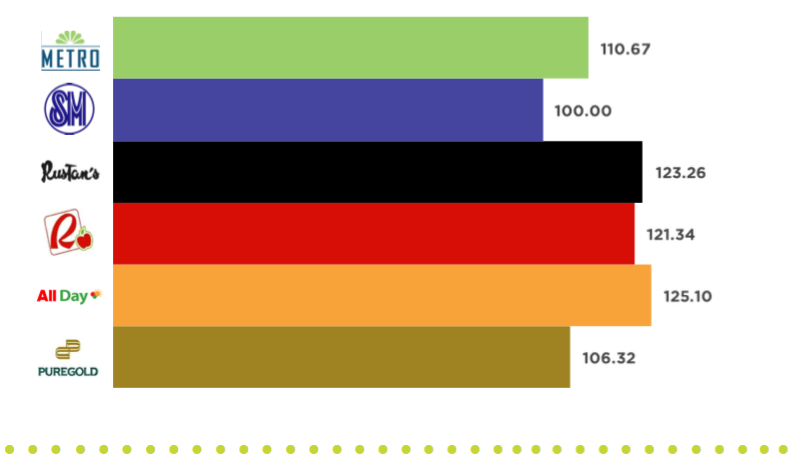
Price Index – Non Food Items

PSR-April-non-food-items

Download the report for more details

PDF
XSL

Need more information?

PRICE SURVEY REPORT – MARCH

Price Survey

Shaw Ortigas Area

EuroAsia Research Experts conducted a price survey among 5 major retailers in the Philippines whithin the Ortigas-Shaw Area last March 10, 2016. The survey was conducted within a 10 hour period and all 58 items canvassed were bought from the different supermarkets.

Disclaimer: Euroasia Research Experts does not endorse any product/brand/retailer. This exercise was conducted purely for research purposes.

PriceSurvey-2

Price Index Average

Price index-a normalized average of price relative for a given class of goods or services in a given region, during a given interval of time.

PriceSurvey-3

% of items not available on shelf

*Not available on shelf-items that were not found during the store visit, products can either be out of stock or not carried by the retailer.

PriceSurvey-4

Price Index – Fresh Items

PriceSurvey-5

Price Index – Food Items

PriceSurvey-6

Price Index – Beverages

PriceSurvey-7

Price Index – Non Food Items

PriceSurvey-8

Download the report for more details

PDF
XSL

Need more information?

PREMIUMISATION

The substantial growth of the Philippine economy over recent years has significantly increased the purchasing power of the country’s Upper C-Class, making it the current demographic to watch closely.

The entire retail chain (manufacturers, suppliers, and distributors) has been reactive to this opportunity, upgrading product offerings with more premium items supported by strong commercial campaigning, notably including more and more investments in brand ambassadors.

Aside from enlarging their product ranges, retailers have also looked to improve on merchandising, with customer experience becoming increasingly important for younger generations of consumers.

The timing is crucial for both vendors and retailers, as this is a huge opportunity to gain market share in premium products, and a valuable push in sales and value margins moving forward. Organized retail chains are prime beneficiaries, as this is a chance to edge out their traditional (e.g. Sari-Sari stores) competition that won’t have the same capacity to improve in marketing.

All this, however, comes with obligatory considerations to ensure a profitable foray into the trend of Premiumisation. Here’s some food for thought:

1) When and where is it happening?

It is already evident in stores located in main cities, specifically in areas benefiting from a more premium market. The challenge lies in a balanced execution, something which many retailers are still having difficulty with. More on this below.

2) What is the impact on assortment and merchandising?

Listing new premium items should in no way destabilize the existing assortment structure suited to the market profile.

Some local retailers tend to sacrifice items categorized as basic necessities in order to accommodate a premium upgrade. This is a risky move in the still unpredictable Philippine market where consumers have shown a desire for premium products, and yet maintain a need for basic commodities and low prices. Listing and delisting products should be carefully addressed to take in consideration the number of SKUs and price segmentation expected for a given category.

Adaptation in merchandising is a challenge driven by market profile as well as the size of the store. Merchandising should reflect the proportion that the retailer has decided to allot to low, mid, and premium segments.

Finally, overspacing for premium items may have negative consequences on sales productivity and price image. Underspacing on the other hand may reduce the opportunity for the trend altogether. The trick is finding balance, balance, and more balance. Remember that the spirit of Premiumisation is one of complementing and not replacement.

3) How far are you willing to take it?

Alignment of your marketing initiatives with your vendor’s program is key. When people see products represented by celebrities on TV, they expect to find these at the forefront of the store.

Upon launching a premium product, try to feature it as much as you can in catalogues. Organizing in-store activities will surely reinforce its visibility, so seek out all opportunities your vendor can provide such as sampling, booths with promodizers, etc.

Forecasting sales with the vendor is also a must in order to replenish stocks in a timely manner.

At the end of the day, Premiumisation provides a unique opportunity for retailers and vendors to work hand in hand under the same interest of getting an uptick in sales value and margins. The biggest risk you can take is not taking the risk at all and missing the boat on this trend.

THE VALUE OF TRAINING

The Philippine retail industry is growing, and fast. Can your employees keep up? Retail experts are difficult to find. You might be able to hire skilled employees, even with minimum experience, but will they be loyal? The borrowing of talents is a short-term solution.

Instead, consider training your employees. Look into providing them managerial and technical tools. Support the individual development of your employees. If training is a key component of the company strategy, you will be better equipped to keep up with the changing industry.

The basics

The first step is to identify the type of training your team needs. What is required by your company strategy? What vertical and horizontal trainings are necessary? The goal of this process is to align the needs of individual employees with the company’s priorities. Find common themes and specific modules needed to improve your company’s technical or managerial capabilities.

The next step is scheduling. Allocating time for training means taking employees away from their daily tasks. In the retail industry, this can be a challenge. You should find a schedule that is optimal for the employees involved, to make sure that everyone benefits from the training session.

The third consideration is the expense. When you prepare your budget for the next year, you should include yearly training and its associated costs.

As with many other aspects of business, the ambition and support of the management is key. Set training goals for each year. Monitor and evaluate closely, to make sure the employees reap the full benefits of the training. See what you can improve. Few retail companies are consistent in their training plans.

Appoint a training and development manager

In many companies, training is assigned to the human resources department, or to a manager with many other responsibilities. In such cases, the training might be poorly handled, and it simply becomes a waste of time and effort. Instead, appoint a training and development manager.

During my experience with Carrefour in Saudi Arabia, we invested in a training and development manager, and it was a true success. We were able to plan training sessions and organize the logistics for each year, with minimal issues. We managed the entire process, from the training plan, the organization of the training and related activities, to the monitoring of the progress. In a country with limited exposure to retail best practices, it helped the company to set standards early.

Plan a yearly training schedule

It always helps to plan ahead. When you prepare your yearly schedule, you can select and prioritize programs, allocate appropriate time, and adjust the budget. Such planning and foresight also shows the entire organization the value of the training. In addition, your managers can anticipate the impact on operations, when they or their staff are called away for training.

Company priorities will help you narrow down the specific technical trainings that individual employees need. Horizontal trainings often help augment individual performance, especially for positions supervisory and higher.

Some companies also conduct trainings on specific topics, not necessarily those directly connected to the company’s work. These trainings are among the benefits provided by the company.

Get qualified trainers

Training is a special skill. Technical expertise is an advantage if you can deliver the key messages. Communication skills are essential, as well as the capacity to manage people of different group sizes.

With qualified trainers, you are assured that your employees will benefit from the training. Your team will pay better attention, be more interested, and show more respect if the trainer is clearly a professional. A professional trainer will be able to provide you with a structured program, and documentation that you can keep as a reference.

You will also have access to the trainer’s wealth of experience, which will be shared with your team. A qualified and experienced trainer can provide a benchmark on the best practices. This will help you and your team to assess the company’s current practices, and measure gaps and opportunities. The trainer’s skills and knowledge will result in immediate learning for your team.

Choose a nice facility

I recently met with a client for business reviews. The client chose to meet with vendors in a nice, well-equipped venue, away from their head office. The vendors were impressed with the place. The buying team was able to focus on their presentation and on discussions with vendors. All presentations took place in a pleasant environment. The hotel provided ample service, from snacks and coffee to technical assistance. All these conveniences made our stay comfortable and helped us focus on our work.

If you can, hold your training out of the office. Bring your team to an environment where they can forget their everyday concerns. The conditions should allow them to focus their full attention on the program. Taking the training out of the office reduces the possibility of distractions like phone calls, faulty equipment, or noise. Make meal times pleasant, with healthy food.

Provide your team with an experience they will remember and talk about in the office for weeks! If they are comfortable and relaxed, they will get the full benefit of the training, and that will be time and money well-spent.

How customer service is done

“Customer first.” “The customer is king.”

These are rather vague guidelines for interacting with customers. Customer service is a critical aspect of any business, but it is an aspect of business that where many companies make mistakes. It may help for customer service staff to think, “What if I were in this customer’s shoes?” When you put yourself in the customer’s position, you can more easily figure out how to truly serve their needs.

Why is customer service important?

Customer service policies exist because unexpected concerns arise: a product does not meet expectations, the wrong size was purchased, the product turned out to be of poor quality. Perhaps there are problems with the product. There may be room for improvement.

These concerns stem from one critical assumption: that your product is of good quality. A good product should provide consumers with a good experience. So when a customer files a complaint or requests an exchange, you should see it not as a disaster but an opportunity.

Customer service is an opportunity to turn a negative experience into a positive event. Rules for return and exchange should always have the end goal of providing the customer with a positive experience. The customer has a problem involving your product, and you should do your best to provide a solution, one that reduces the customer’s stress and annoyance.

99.9% of customers are honest.

Paranoia is common amongst retailers. There are fears of profit loss, cheating by cashiers or sales staff, and other unscrupulous practices. To protect the company, retailers often lay down customer service rules that are overly strict, filled with tedious procedures and endless forms. These ensure protection for your business, but they are not very accommodating to your customer.

Online stores have been very progressive with their exchange and refund policies, and brick-and-mortar stores would do well to follow suit. Your customer most likely has a genuine request. Very likely your customer wants to come back to your store. Your customer service policy should encourage customers to keep coming back. Start with the assumption that all customers are honest, and design your rules for them. Inevitably there will be some unscrupulous customers, but these are an exception and not the rule.

Rules, decisions and escalation.

All employees of retail organizations have to follow strict rules. The same goes for customer service. But most sales staff don’t have the authority to make decisions about return and exchange. The request is only granted after the customer has spoken directly to the sales staff supervisor. This is frustrating and time-consuming for everyone involved.

Even lower-ranking employees should have authority to make decisions about return and exchange. Escalating the problem to their supervisor should only be a last resort, and addressing the problem should not take up too much time. Rules should be customer-oriented; simple and easy to understand and to implement; and flexible enough to accommodate customer requests.

In most of Europe, exchanges, refunds and returns are quick transactions in any establishment, be it a large supermarket chain or a small family store. If you are not happy with the product, even if it is fresh produce, a half-empty bottle of wine, or half-cooked meat, the proprietor will replace or refund it, no questions asked.

Trust that your staff will make the right decisions to satisfy the customer. Review each case of return or exchange, and make sure your employees understand the proper way to respond to customer complaints.

It’s not what you say. It’s how you say it.

Most stores have a sign that indicates their return and exchange policy, usually written in legal language, full of “must” and other forbidding words, as well as mentions of relevant consumer laws. Such signs tend to discourage consumers. If they make a mistake with their purchase, they have little assurance that they can easily correct the mistake.

Your policy can be phrased in a positive and friendly manner. You can say, “Reassessing your purchases? Feel free to change your mind. You can exchange or refund items from any of our stores up to 7 days from date of purchase.” Friendly language is much more accommodating and less hostile to consumers.

Remember, you spend money on promotions and advertising to get new customers. But how much are you willing to spend to keep them coming back?

If well-managed, exchange and refunds are neither a treat nor a loss of sales. They are an opportunity to show respect and empathy to customers, at almost no cost.

One on one consultation

To be the best then learn from the experts. EuroAsia Research Experts will conduct a free consultation on assortment merchandising and product placements on November 23, 2015.

If you’re a part of a merchandising team or if you’re from the retail industry then take this opportunity to learn from the experts.

Limited slots available.

For schedule and inquiries contact us at info@euroasiaresearchexperts.com.

Food safety forum

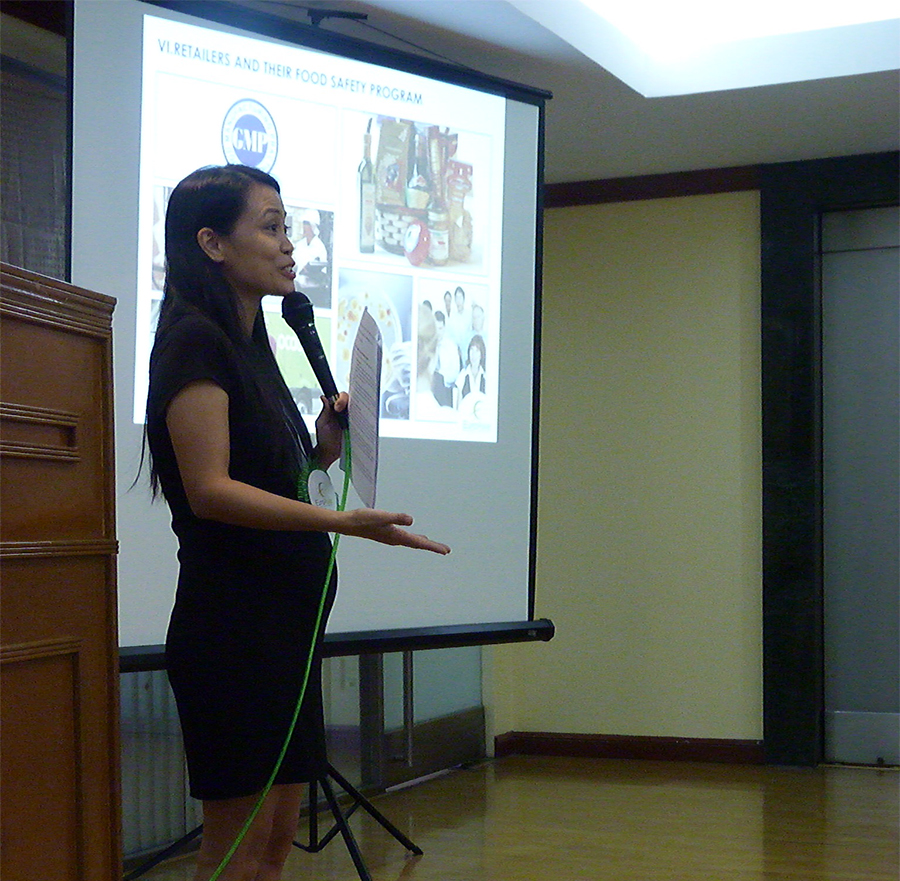
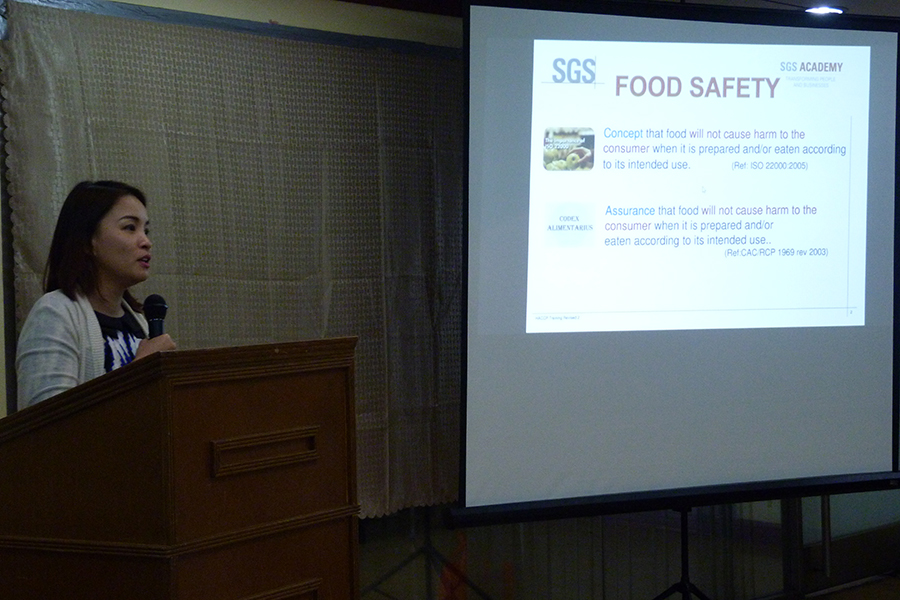
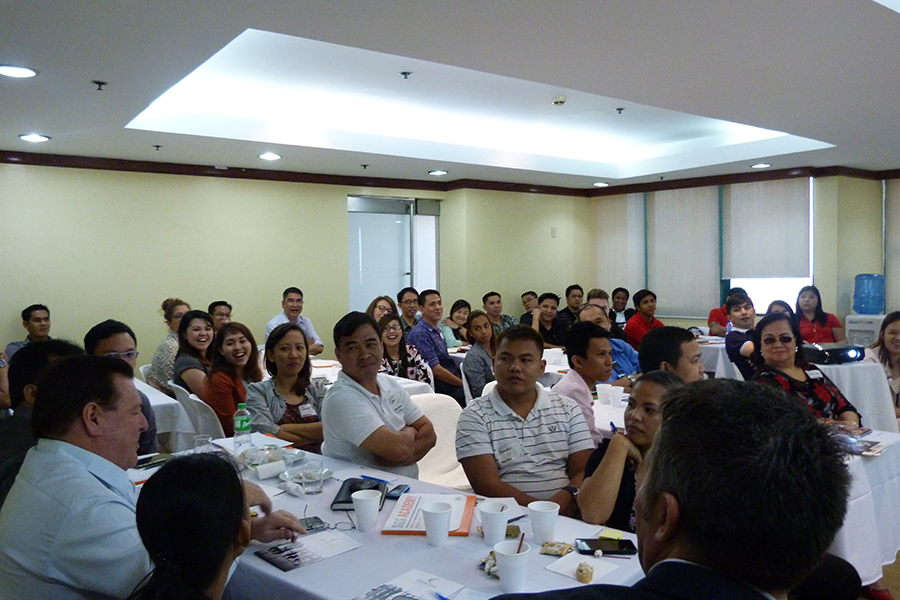
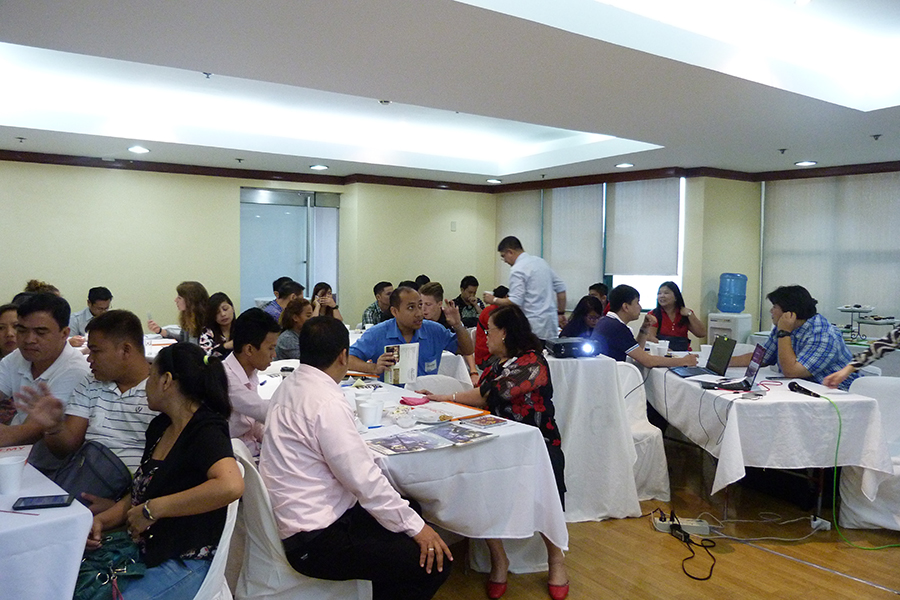
Last November 10, 2015, EuroAsia Research Experts organized a Food Safety Forumevent that was attended by representatives from the different sects of the retail industry. The event focused on food safety particularly GMP and HACCP Certification, Food Safety Act of the Philippines, and the importance of being certified.

The Speakers: (L-R)  Christina Diaz of SGS Philippines, Patty Velasquez of EuroAsia, and Timothy Moises Mendoza of FDA

P1100635

Patty Velasquez sharing insights on food safety in the retail industry and the GMP and HACCP Certification process

P1100638

Timothy Moises Mendoza explaining the Food Safety Act of 2013

P1100695

Christine Diaz sharing the importance of being certified

About the Author:

Eric Poiret
Strategic Planning Director – EuroAsia Research Experts

Eric has a solid experience of more than 25 years in the management of retail chains in the Gulf Region, Asia and France. Before becoming the Chairman of ERE, he was Managing Director for Metro Gaisano, Chief Operating Officer for ASWAAQ, a Dubai Government-owned company, and Chief Executive Officer for MAF Carrefour KSA. Eric Poiret’s expertise lies in strategic planning and operations management.