Love, intimacy, and romance may be different for most people this year. Due to travel restrictions and social distancing guidelines, even short distances have turned into LDRs (long-distance relationships). While some may be lucky enough to be together, still the usual celebrations may not be possible as in the past. It is a good thing that Filipinos are known to be resilient. Over the years, Filipino expressions of love and romance have evolved with cultural adaptations of the modern world, economic situations, societal trends. With Valentine’s Day fast approaching, let us take a loving look at Filipino romance over time and understand what they did for love.
USO PA BA ANG HARANA? (Does serenading still exist?)
As a line from a popular song reverberates in my mind, I am taken back to stories my grandmother told me on how women were swooned by bachelors with evening serenades. Done with an entire combo (band of musicians), the lovestruck hopeful serenades his ladylove who shyly looks from above, peeking through the windows.
Puno ang langit ng bituin At kay lamig pa ng hangin Sa’yong tingin akoy nababaliw giliw
At sa awitin kong ito Sana’y maibigan mo Ibubuhos ko ang buong puso ko Sa isang munting harana para sa’yo
– uso pa ba ang harana, parokya ni edgar
Perhaps because homes hardly integrate wide open windows nowadays or high-rise communities have evolved for safety and convenience, harana is ancient. As times changed, this sincere gesture of love offering slowly faded into oblivion. Thankfully though, it has not gone extinct; only reinvented with time.
MR DJ, CAN I MAKE A REQUEST? – Sharon Cuneta
From the DIY serenade in the olden days, expressions of love channeled on to new dimensions. With the emergence of the powerful AM/FM transistor radio, love language penetrated the airwaves in the 70s and 80s. I recall how Joe D’ Mango’s Love Notes that aired with “Dear Joe…”, and radio stations like Mellowtouch playing romantic ballad requests became famous and well-loved by cupid’s targets.
While the Gen Zs and Generation Alpha may find this all-too-amusing and tacky, they are doing the same things in a different way. Virtually, that is. YouTube, Facebook, Viber, Whatsapp, IG, Twitter among others have all become channels to reach even the farthest object of love and affection. The younger ones nowadays sing their hearts out in cover songs perhaps meant for someone in particular but for all the world underneath the moonlight to see and hear ….
Sa ilalim ng puting ilaw Sa dilaw na buwan
Pakinggan mo ang aking sigaw Sa dilaw na buwan
– buwan, juan carlos
P.S. I LOVE YOU
I don’t know about you but I am still in love with the art and craft of writing. True, MS Word has made life easier. But, I still love the smoothness of the paper, examine the spacing between lines, and carefully pen each cursive stroke especially when writing letters to special people.
Mister Postman look and see (Oh, yeah) Is there a letter in your bag for me? (Please, please, Mister Postman) I been waiting a long, long time (Oh, yeah) Since I heard from that girl of mine
– The Marvelettes, The Carpenters, The Beatles
In the pre-Hispanic era, letters between soon-to-be-lovers were exchanged through a mediator who hand-carried the notes, often in secrecy. Then came the Pen Pal stage when love notes were sent through snail mail and good old Mr.Postman became every young lady’s best friend. Given the extensive scope of electronic mail and a plethora of social media channels, love letter sending is no longer mainstream. It is good to hope, however, that there remain romantic couples who find the extra effort more sincere and amorous and thus continue on with the tradition. (IKR, I am an old soul.)
I JUST CALLED TO SAY ‘I LOVE YOU’ – Stevie Wonder
When telephones invaded the world, love letters were sealed in a box and found their resting place under the bed or deep into the closet. From spending hours on finding the right words to write, partners shifted towards hours telling each other sweet nothings over the phone. My parents would often scold my lovestruck sisters then for burning telephone lines (telebabad in colloquial terms). Even without phones at home, all it took was a walk towards the corner grocery store and three 25 centavo coins to make a 3-minute call. Actually hearing someone say the three words in hushed modulated tones never failed to make the ladies blush and squirm with delight. Soon enough and sadly so, the iconic telephone booth with a bulky red coin-operated phone is nowhere in sight.
ILY. OMG??? AWWW… ILY2
While I submit to the fact that communication has indeed become more convenient and immediate with technology, it amazes me that the advent of cellular phones led to a whole new level of courtship. Shortened words, jumbled letters, and an entirely new list of acronyms that made the writer in me cringe every time. In my time, the popular acronyms used on slum book dedications that sent love jitters to the spine where TCCIC (Take Care ‘Coz I Care), ITALY (I Trust and Love You), and 143444 (I Love You Very Much – count the letters on each word). Texting has created a whole new set of everyday vocabulary that non-Millennials like myself would Google to understand!
While becoming Textmates and Callmates gave a certain level of excitement for the younger generations, getting that sweet YES became easy as typing I-L-Y with thumb work speed. It may either mean I LIKE YOU or I LOVE YOU which seem to be taken on the same level. That is probably the reason why this love evolution had brought about both boon and bane effects towards the persons involved. Others find true love after a series of dates or ‘eyeballs’, some are not as lucky falling prey to deceitful individuals.
Back then, date nights were important. Even as adults, it was important to seek permission or ask for the blessings of parents and elders. Real gentlemen fetched the ladies from home and took them back before the clock struck twelve. Then dating became so loose and casual as to “Let’s Eyeball”, a risky decision to meet up with a textmate you hardly even know.
Fast forward, wanting to see someone these days does not require riding the MRT or booking a Grab ride. It is done as quickly as tapping video chat on any social media platform. Couples now enjoy an eternity of virtual togetherness, for as long as the internet signal remains stable.
There are many more ways that love and courtship may have shifted from one generation to the next. It may probably require more storytelling with lola, nanay, ate, kuya, totoy and baby to understand the evolution of Pinoy love. The truth remains that love in any language, puts us all together, never apart as one song goes. And for Pinoys and everyone else in the world, LOVE ALWAYS FINDS A WAY.
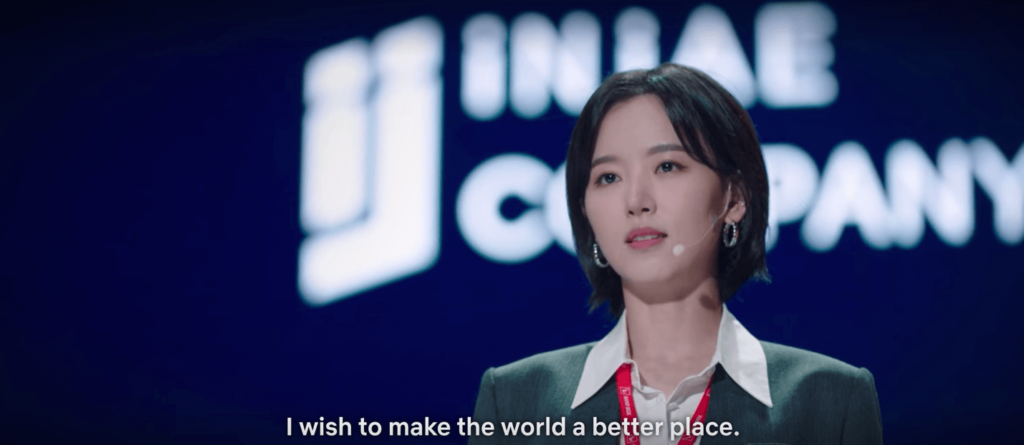
The latest Korean Drama or K-Drama craze has hit the country and other parts of the world with the airing of “Start-Up”. Different fan groups of the lead characters were quick to get hyped up, but even non-fans got hooked with the love triangle story that had been a common plot for as long as we can remember, yet we can’t get enough of it.
But besides the obviously enthralling love story, the series is packed with lessons that millennials and young professionals should take note of. Lessons that go beyond love; investments and start-up businesses.
The path to success was and will never be a straight line
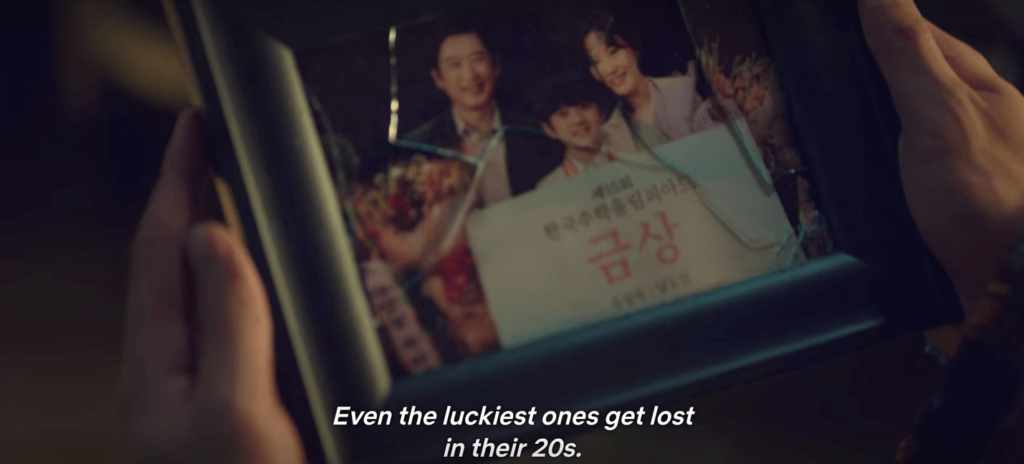
As kids, we grew up with the idea that as long as we take care of our studies and remain competitive in our academics, we will have a bright future ahead of us. Which isn’t a lie. But what we failed to learn while we were young is that the path to success isn’t as straight as what our storybooks have led us to believe. The reality of life usually kicks in when we reach our 20s, thus the term “adulting” came in. Transitioning from the idealistic world of our childhood and the wildness of our teenage to the grueling reality of adulthood could be overwhelming, and even the most promising prodigies can get lost in their paths. For this reason, the show intends people to see that being lost isn’t the endgame, but rather a bump in the road that we need to traverse. No one can be considered a complete failure because there’s still too much to be explored and too much to discover. Most of the time, these major bumps in the road make us see that our paths may not be conveniently straight, but the twists and turns often lead us to where exactly we have to be.
You can’t be a CEO if you can’t make decisions
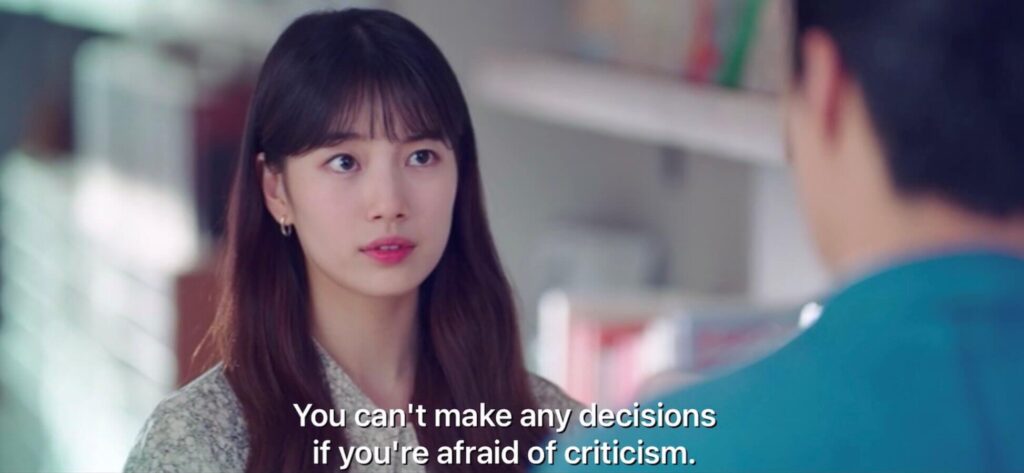
In life, it’s true that one can’t please everybody. The same goes for running companies. A good person would like everyone to be happy with where they are and what they receive. But this can hardly be applied in running a company. As much as you want this, it is impossible to achieve. A CEO should work not to please every employee but to make decisions, no matter how risky or hard for the betterment of the company as a whole. A good CEO is someone willing to take responsibility for the decisions he or she makes.
You have to be more careful when a deal is too good
Just as much as we would like to believe that the corporate world is a friendly place, we have to be very critical with our business affairs, particularly as young professionals. It may be bad to be very cynical up to a point of being pessimistic with everything and everyone, but being extra careful before signing anything will help us in finding the right partner, right clients, and right investors. If a deal is too good, it is definitely a good thing to consult another professional who holds expertise in this matter to give the deal a new interpretation and perspective. Since millennials are still considered new to this stage, finding people to trust and learn from is just as important as enhancing your technical skills.
Charisma is just as important as technical skills
We were taught from a young age that as long as we excel in Science and Math, we would excel later on in our lives. Usually, the noisy ones are perceived as the kids who will not do very well outside school. But in reality, and after gaining maturity, we realize that this is not always the truth. Our noisy classmates in the past are often the charismatic employees now with the capability and potential to lead teams and companies. This further proves the importance of every part of the team, with varying expertise and strengths in different areas.
You must always know your why
One of the most important lessons in the whole series is establishing the reason why you do what you’re doing. Whether it’s for financial reasons, for your dreams, or simply to prove something, this reason would fuel you, especially in the rough times. In a very interconnected world where success became the measurement for your status as a person, it is very easy to get lost doing what society wanted us to do just to be considered successful. The very coveted word is by itself also a reason why so many millennials right now are lost.
The series tells its viewers that it is easier to go through the difficulties as long as the vision, goal, and reason for persevering is clear. Just like in the corporate world, a company has no identity without its vision, mission and goals.
Transitioning from the safety nets of dependency to independent adulthood can indeed be overwhelming. When we were kids, we are often asked “What do you want to be when you grow up?” and we always answer with confidence and a strong sense of aspiration making it seem so easy to someday reach our dreams. But when reality hits, it’s always disheartening to see that no matter how prepared we think we are, there are still so many things that our future experiences are yet to teach us. Adulthood is realizing that we can never really be fully equipped, but we continue moving forward nevertheless. Adulthood doesn’t mean we don’t get scared anymore, but understanding that fear is natural and it shouldn’t stop us.
Start-up as a TV series is so fun and compelling because it greatly depicts the struggles and yet the potential for success for every young professional. It shows the funny side, the romantic side, and the confusing areas that we always find hard to deal with. But more importantly, it is packed with pragmatic life and career lessons that would come very handy in this period in our lives.
Times are changing, and many of these changes will either stay for a long while or continue to persist after the pandemic. The pandemic has accelerated buying trends, thus creating new priorities and psychological profiles of shoppers. This has made understanding consumer behavior more important than ever, yet has never been more intricately challenging. Brands are finding that balance between becoming agile and accelerating digitalization while maintaining brand authenticity and relevance to the market.
The Philippines has one of the longest lockdown and community quarantine relative to the pandemic. Even as contagion is still present, the government is slowly relaxing restrictions to revive the economy. But with thousands either losing their jobs, taking on pay cuts or being placed on furloughs, consumer spending has decreased.
The good news is – PEOPLE WILL CONTINUE TO SPEND.
In fact, the pandemic brought in new retail channels, accelerated digitized transactions, introduced supplemental contactless services such as call/text to order for a store or curbside pick-ups — all anchored on serving customers and keeping them safe. While the on-line and off-line spending combined may still fall short versus the pre-pandemic state, spending continues but will be intentional and controlled in the new reality. With limited budgets, the share of wallets will primarily be for food, personal care, and household cleaning. Travel, leisure, and entertainment will slowly return but will take a back seat behind domestic priorities. The challenge now for retailers is to secure that share of wallet from the adjusted and limited budget for spending.
With the majority of Filipinos still fearing contagion, how will the market respond and behave in the new reality? How should businesses adapt and evolve to better serve consumers? We share our thoughts and observations from our diverse retail and vast market to help chart strategic business directions in order to stay relevant in the highly complex retail industry during unprecedented unpredictable times.
SHOPPERS WILL STILL WANT TO EXPERIENCE SHOPPING
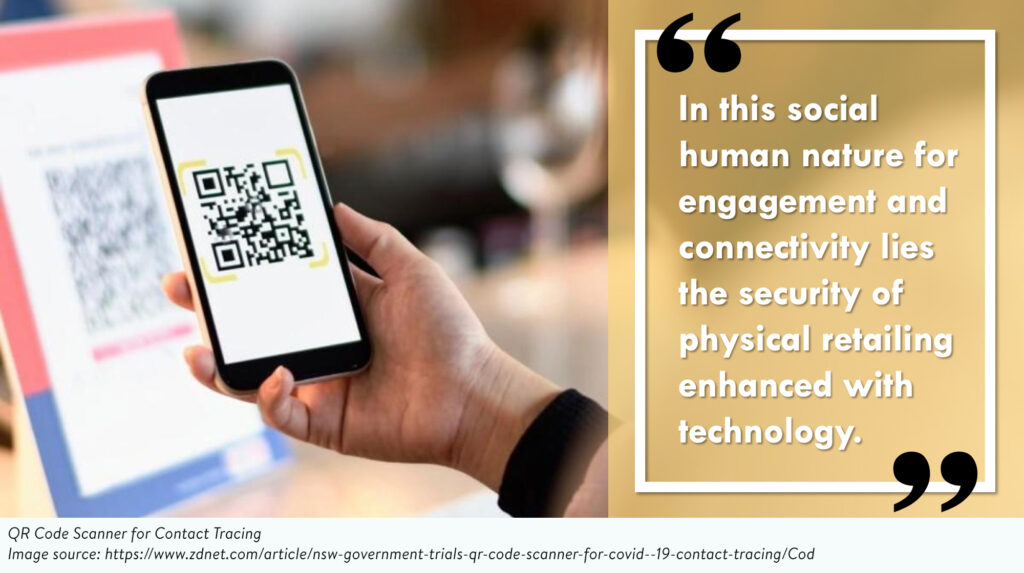
While e-commerce is on the rise and more Filipino consumers have learned to embrace on-line shopping and cashless transactions, consumers will continue to long for the usual ‘experience’. Even as digital shopping provides convenience in a click and offers a much better promise of safety, it fails to satisfy the need for personal connection that physical stores provide. Chatbots fall short in extending immediate response-action that consumers are pampered with by store personnel. For many, shopping is a therapeutic activity where the journey in itself is a form of relaxation and entertainment, while the freedom and ability to see-touch-feel the products are gratifying. In this social human nature for engagement and connectivity lies the security of physical retailing enhanced with technology.
VALUE FOR MONEY TAKES ON A HIGHER MEANING
Pre-pandemic, value-for-money was one of the most abused marketing propositions that it has somehow lost its spark. Because it is human nature to value what is lost or lacking, this jargon has finally regained its popularity and relevance. With credits to the uncertainties and unpredictability of the times, VFM is now a critical theme for the new reality. For the consumer, it is getting more for what they paid for. For the retailer, it is acknowledging that one’s role is no longer simply providing the goods at the right time, place, and price; it is addressing the customer’s expectations of paying for goods that have excellent quality, freshness, and affordability. VFM is communicating well to the consumers that money spent in the store, is money that is worked hard for, is patronage that is valued by the retailer.
ASSURANCE FOR HEALTH AND SAFETY IS A BASIC NEED
As soon as news of the virus hit the streets, establishments felt the painful impact of a rapidly declining foot traffic. Shoppers made fewer trips, quicker visits, and fortunately, higher spend. However, the magic touch of impulse buying lost its power, cross-selling and up-selling became more challenging with limited people shopping in-store. In a snap, retailing changed and the agile organizations embraced digital technology and other contactless shopping options, linking brick and mortar to online platforms. If there is anything good that the crisis brought, it is the long-overdue advancement of shopping technology and the overall improvement of convenience and service to customers. In reality, though, this shift in shopping behavior that drove all these retail innovations is due to fear of contagion. To slowly ease customers back into physical stores, retailers must continue to prioritize the health and safety of consumers. Physical stores must not be complacent in communicating and religiously practicing safety and precautionary measures. Consumers will only return to the store or slowly revert to their usual shopping behavior if and only if they are confident and trusting enough of the brand they patronize.
REVISUALIZING VISUAL MERCHANDISING
In welcoming the return of warm bodies, store layouts must be adjusted and conformed to evolving habits and preferences. There must be a balance between smart layouts and planograms with considerations for efficient implementation of social distancing, lower capacities, and directed customer flow. It is likely that safety signs and hand sanitation sections will become a staple in every store’s blueprint. The usual visual merchandising tactics – cross-merchandising, free-standing units, animations, on-shelf and off-shelf displays, impulse stacks, sidekicks and end caps – all must be taken more seriously to optimize space planning and drive larger baskets. While every brand is into innovation, this may be the right time to put in place smart shelf technology for aesthetics and customer analytics.
TIGHTER ALIGNMENT WITH CUSTOMER PREFERENCE
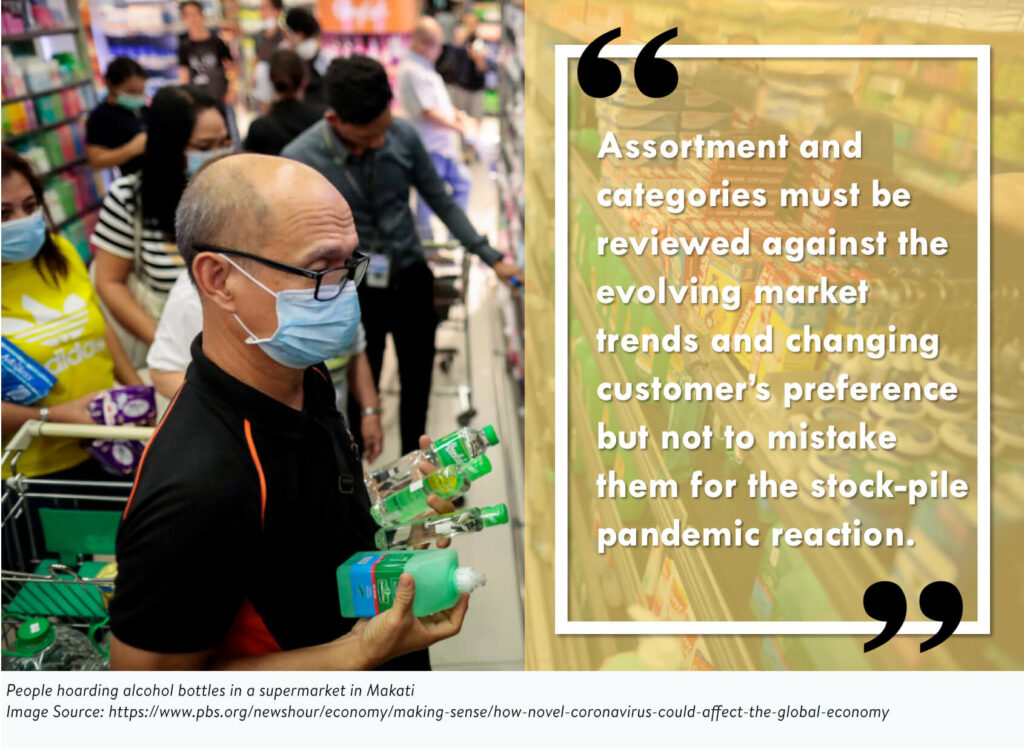
As much as traffic count will be key to survival as pandemic eases, every opportunity must be taken to grow the customer’s basket. Assortment and categories must be reviewed against the evolving market trends and changing customer’s preferences but not to mistake them for the stock-pile pandemic reaction. For instance, the emergence of the home or domestic economy opened the gateways for the baking category to rise from simply being a niche; health essentials became a destination. With issues and concerns on product availability in the past months, brand loyalty waned, allowing secondary or even nameless brands into the retail mainstream. As travel takes the back seat, consumers take comfort in food to take them to places with nothing preventing them from tapping into available channels that could satisfy their global cravings. To secure customer patronage and market interest, variations on relevant assortment must be considered. Simplifying the buying process would be helpful as well in tapping into local markets and growers and start-up entrepreneurs to beef up product offerings. To have a seamless interface across front and back end operations, there may arise the need to reinvest in demand forecasting, assortment and customer analytics to respond to the disruptions in supply networks and in customer behavior as exemplified in the unprecedented COVID-19 pandemic.
IN CONCLUSION :
For businesses to survive and stay relevant, they need to develop a strong understanding of the aspects of the new realities in retail. Consumers will ease their way into brick and mortars as the pandemic restrictions relax because it is natural for human beings to want to connect and engage – an experience they find more satisfying than e-commerce transactions even as they have learned to adopt it. With paranoia prevailing, there will be fewer trips but with potentially higher spending. Nonetheless, to bring them back into your stores and regain confidence, there is a non-negotiable requirement of being promised health and safety. Faced with decreased customer traffic, lower sales productivity, and inventory issues, brick and mortar stores need to adjust by adding new and relevant product lines to drive sales, rationalize depth and breadth of variations and sizes to accommodate emerging categories. Such adjustments will require interface with store planning and visual merchandising to optimize space. As innovation helps brands to stay relevant, and product offerings and service keep customers’ business, how the brands behaved towards helping others in the midst of the pandemic define the patronage of consumers-turned-advocates. What will continue to resonate in the hearts of the consumers is how brands placed precedence on genuine concern and service for the community it serves beyond business.
COVID-19 has unmistakenly affected global markets, forcing businesses to explore innovative solutions to overcome the growing negative implications of this unprecedented crisis in what is now known as the new normal.
New Normal. New Psyche.
With products and industries identified as essential and non-essential at a time when the market is stricken with fear and anxiety, convenience and preference as purchase influencers have been overtaken by immediate product availability and trustworthiness in the realm of safety in the new normal.
Consumers have shifted from their brand of choice to what is available and on hand.
Customers are more cognizant of brand’s ability to be tenacious in upholding promise amidst the crisis.
Customers gravitate more towards brands that have walked the talk with visible safety and precautionary measures for their stakeholders. Over time, audience fatigue is observed on Covid advertising without seeing any practical help or action.
Consumers are moving away from “consumerism,” focusing on service over product.
HEALTH IS PARAMOUNT
As with business and among individuals, health is both a concern and a priority.
While consumers stay within the safety perimeters of home and avoid crowds to protect themselves from contagion, businesses strive to be relevant at this time to sustain operations.
As business models are reviewed and reinvented to be financially healthy in the new domesticated economy, there remains the greater concern for the well being of communities that needs to be addressed, an expected non-negotiable consumer requirement from all sectors even when the crisis has settled and restrictions are eased.
BEING ESSENTIAL
Unknown to many, businesses such as supermarkets operating in the midst of a health scare deal everyday with the inestimable difficulties of managing inventory, logistics and other operational concerns including pandemic-related anxieties among frontline employees.
On top of all these and the daily risk of exposure, there are higher expectations from businesses to have a greater sense of responsibility in matters of compliance to governing ordinances and adherence to protocols in the upkeep of public welfare and safety.
The crisis has upended daily operations as we know in a high risk situation that make operations even more complex while enduring the pains to keep the business afloat and serve consumers best.
BECOMING ESSENTIAL
On the flip side, non essentials work doubly hard on innovating and reinventing themselves to prevent brands from fading into oblivion. Becoming relevant has become mandatory at a time when the propensity to purchase among consumers has not only become limited but very meticulous as well.
Branded apparel lines crossed-over from stylish fashion to much-needed PPEs aligned with their image; others came up with signature face masks and shields that remained true to their brands’ lifestyle edge. Liquor manufacturers produced sanitizers and disinfectants instead. Fast food chains made available bestselling products on the menu in supermarkets to save precious inventory from being written off, and to be perceived as a brand that ’empathizes’ with its consumers at a time like this.
Essential or not, all businesses struggle with challenges and continue to innovate in order to become relevant. The impact on the economy is global, so tremendous that many folded up causing thousands their jobs, crushing hopes and dreams the world over.
If there is anything good this crisis has done, however, is that is has brought people together, unified opposing views, humbled humanity enough to recognize that no one can live alone, bridging differences to rise again.
WHEN GIVING UP IS NOT AN OPTION
The situation spared no one – shattering businesses large and small, confining millions to their homes, it has leveled the ground for both economy and society, leaving even the strongest vulnerable to its most destructive effect.
History shows that it is in crisis that the Filipino spirit triumphs.
It gives us pride to witness businesses collaborate and support the with government to help provide the needs of thousands displaced by the crisis. Faceless corporations suddenly showed humanity, prioritizing and providing people in their organization help in every way possible. Consumers patronized MSMEs and start-up entrepreneurs and local products. Even payment deadlines have been extended.
As some formats are forced to cease operations, business leaders back up the ones that remain in service. Others reinvent and rebrand to continue employing thousands. Rising above profits to people, essential businesses are reinforced with providing additional resources and support to cushion the impact on weaker businesses and keep the economy robust.
The unified efforts of the team are what bring success on the water. No matter how strong individual paddlers are, if a team doesn’t work together, the culture of trust and respect won’t be there and the team can’t go far.
COURSES MAY CHANGE, VISIONS REMAIN
We draw inspiration from some examples of business leaders who were undaunted by the seeming hopelessness and helplessness of the economy during lockdown. These are visionaries who instead of withdrawing, marched on ahead in full gear to conquer and succeed.
A retail tycoon courageously enlists his essential business for IPO when stocks are shaky. Instead of taking the hit from other crisis-affected businesses in his conglomerate, the leader tenaciously reinforce his strongest weapon to counter adversity.
Another retail operator practiced transparency with his people, explaining the potential risk of closure brought by the effects of COVID-19. Endeared, he got the full support of his team on improving productivity. Today, the stores are still fully-operational with not one less employee.
A leading local operator stands by the commitment to serve the community best. Despite being embattled by difficulties surrounding the pandemic, genuine concern for the people and community thru efficient service take precedence over profitability. Today, the brand remains endeared as one that would stand by its promise, making it stronger even in the face of giants.
The geese migration routes never vary, year after year, even when the flock members change.
In spring, they will always return to where they were born.
The lesson to learn here is to stay true to our core values and purpose.
Strategies, tactics, and products may change in order for an organization to remain agile, but great companies always stick to their core purpose and values, and preserve them with vigor.
WHEN THE WORST BRINGS OUT THE GOOD
A pandemic is a moment of tough choices. Decisions made now will shape the fate and define the future of millions.
How do we save people’s lives without destroying their livelihoods? Where do we allocate scarce resources? How do we protect those who do not have the means to protect themselves? Should we let go of people to cut down on expense? World leaders, business owners, heads families all over the world are trying to find the balance between being sustainable and being helpful.
The choice is not about which business must remain; rather it is about how to become agile to sustain the weak and emerge together more resilient and united, leaving no one behind.
The pandemic has proven that one law defies gravity.“We actually rise by lifting others. Others do not have to lose in order for you to win. Help others succeed, and we will be successful.” – Francis Kong
We want for every Business to be relevant, to thrive and rise above any challenge, and pivot to sustainable success. We are driven more than ever to work with you to make this happen.
This is it! I have completed 30 years in retail. 3 decades have passed and yet I still have the same passion, enthusiasm, and dedication of my early days.
I was hired 31 years ago as a section manager and since have climbed the ladder to take some top management roles. It was a long way but every step of the way produces a new set of lessons to ponder upon and apply in the workplace. It was a continuous learning – both from experience and from the people I get to work with.
Though my positions in the past were not short of excitement and fulfillment, there was a deep desire in me to build my own company and work with different individuals who can grow with it. And thus, my very own company came to be. Until now, I still can’t believe that it was already 10 years ago.
There are definitely days when it felt like my efforts are futile. Nevertheless, this didn’t stop me from persevering. Despite the difficulties, I knew even back then that it will be worth it. When all else seems failing, I go back to the reasons that fuel me to remain dedicated to my profession and in this industry. Allow me to share them with you:
Retail is a people dependent industry. I like to see myself as a leader that places his team at the center of his decisions. I always go back to the time that I was hired by my first retail employer. I was pre-selected on the basis of my football experience as a midfielder among other criteria. Like in football, retail is an industry where you succeed and fail as a team.
Retail is a very transparent and unbiased industry when it comes to results. Your main stakeholders, the customers, are a fair judge to your business decisions – rewarding you for the good ones and sanctioning you for the bad ones.
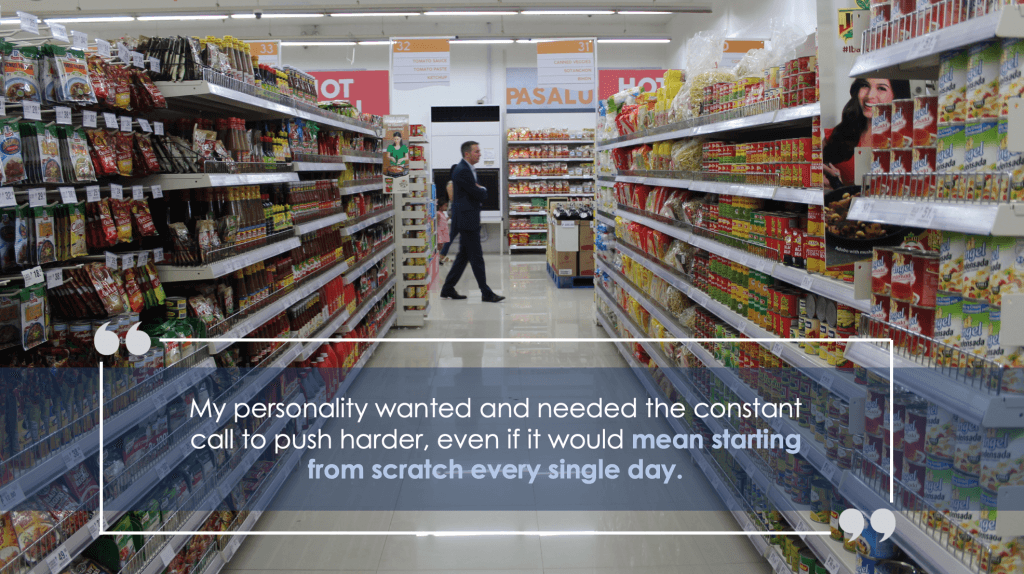
Retail is also an industry where every day is a fresh start – the challenge comes on a daily basis and success or failure could never be definite. My personality wanted and needed the constant call to push harder, even if it would mean starting from scratch every single day. This is considered a norm in this industry and I believe this deeply affected the culture of hard work and perseverance that I practice even up to this day.
Since we restart every day, retail is a very busy industry. It is common to be on the go every day yet still find the day too short to finish every project on your plate. Though it is energy consuming, there was never a dull moment. The level of productivity is always unquestionably high and even after years of working, the amount of accomplishment that hard work and dedication can do still surprises me.
Though others would perceive retail as an industry of numbers, I believe retailers are in fact very creative people. It’s an industry that encourages you to let go of your imaginations without the fear of being blamed. In the best retail companies, initiatives are encouraged and rewarded. After all, every good retailer knows that change is an inevitable process: it is better for the company to chase these changes than getting caught up by it.
Retail is an industry of the people and for the people. There are numerous offers – vertical and horizontal job opportunities. Moreover, professionalism and efforts to be better are recognized and encouraged. Retail values meritocracy and this pushes people to perform better and more so, transcend their limits.
And lastly, I believe that it is an industry where you find mentors and people you love working with. What I am now, after 3 decades of working in this industry is a product of many people I worked for and worked with.
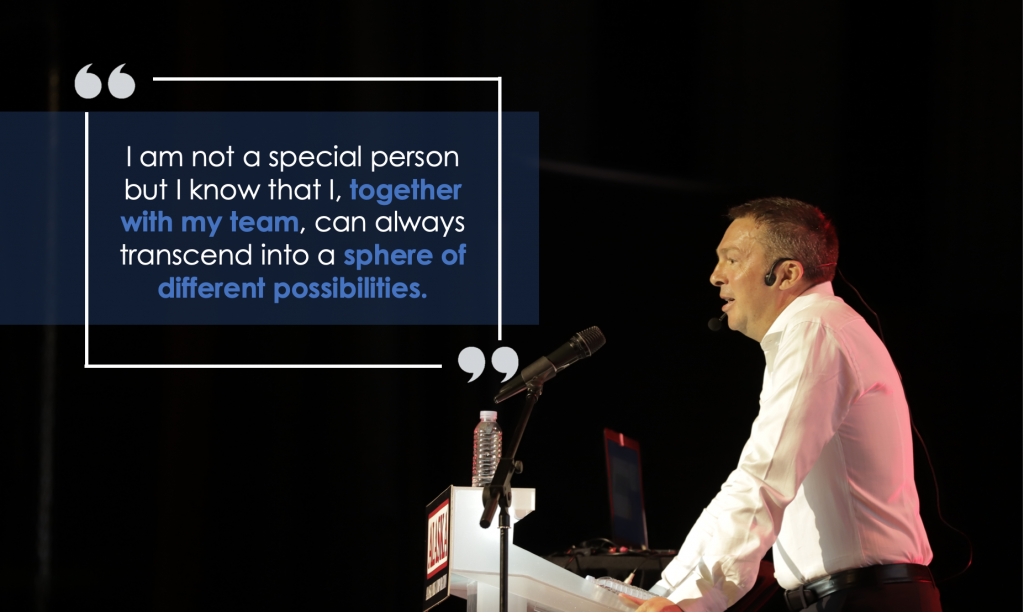
I know that in a perfect world, everyone would be in love with their work. But we are not in a perfect world and for this reason, I value the privilege of being able to do what I am most passionate about. I am not a special person but I know that I, together with my team, can always transcend into a sphere of different possibilities. Working together to gain more trust from our customers.
Despite all the amazing things I mentioned above, I would be lying if I say I never even once thought of giving up. Like most industries, retail is also very demanding of time, effort, and energy – whether physical or mental. It gets exhausting too. Getting older has made me more cautious about the time and more mindful of quality moments spent with the family. But despite all these, I am still very enthusiastic about the years to come and opportunities that will arise.
During my youth, I was dreaming to become a professional football player. I probably lacked the skills to embrace this career. Nevertheless, I am happy about where I am now. There was never regret about my chosen career and could not expect a better situation work-wise.
It is not a secret to everyone that the key to getting as many customers as possible is understanding everyone’s constant quest for convenience. This goes to say that a retailer’s main priority is to make sure that the business is accessible to every consumer at any given point of time and that the transactions are not just easy but fast. But more than the demand for convenience, some consumers are also doing their part to assure the efficiency in their transactions. Moreover, collective consideration and shared responsibility among consumers show a promise of faster retail and further convenience for everyone.
Japan had been known worldwide as a country offering convenience and efficiency. Through innovative business solutions, big or small, Japan is becoming more and more a benchmark for every retail market in the world. Customer service is the language of every retailer. Japanese consumers are also known to be one of the most unforgiving in this aspect. In a survey conducted by American Express International, 57% of Japanese respondents answered that they immediately stopped or never went back to an establishment after just one bad incident. Since Japanese consumers are willing spenders, one customer lost already means bad business.
Though convenience can be seen in every nook and cranny of Japanese retail, Japanese culture also suggests a shared responsibility and consideration towards everyone. In this regard, a person new in Japan can notice even the smallest practices that Japanese normally observe.
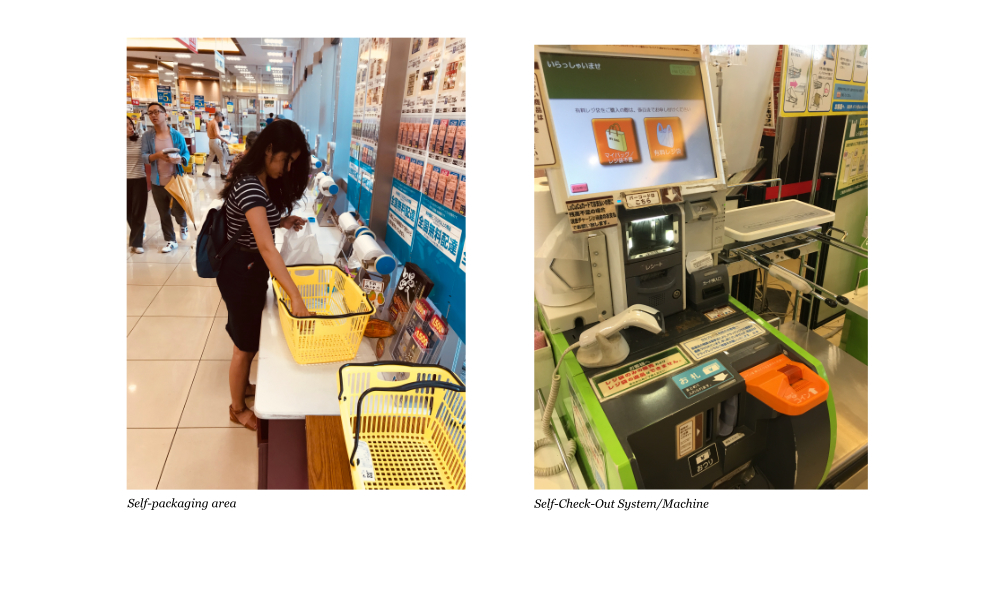
For one, most restaurants practice the “claygo” method or clean-as-you-go. Every customer is obliged to clean up their own tables after using it and take their trays and used utensils in a designated counter. This doesn’t only help the staff by reducing their work, but this also lessens the waiting time to be seated in a vacant table as it’s ready for use once the customer stands up. Additionally, it is also considered normal for every supermarket to have its area designated for packaging as customers are also obliged to do it by themselves. More so, there are self-check-out counters where customers can scan, pay, and pack their own purchases. These are some of the reasons why you will almost never fall on queue in every supermarket as transactions are fast and efficient.
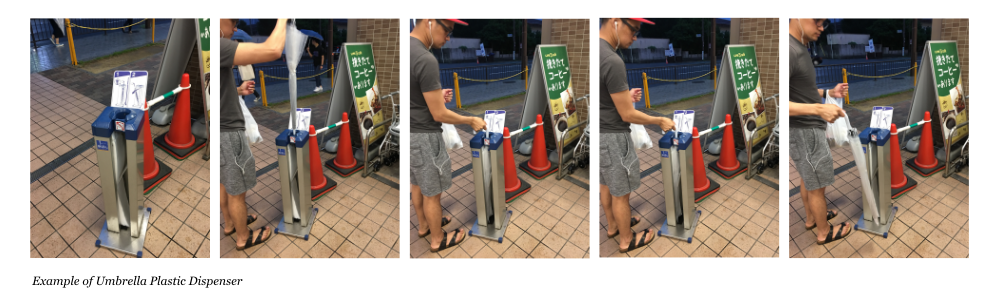
On a rainy season, you will normally see plastic dispensers outside establishments encouraging everyone to cover their wet umbrellas to avoid it dripping inside. This will not only give the staff less mess to clean, but this will also help avoid any accidents due to slippery floor. A trash bin is also available outside to assure the proper disposal and recycling of these plastics. This is considered a very simple practice but it has considerably good benefits both on the business and the consumers.
Recently, hotels in Tokyo are equipping themselves with unmanned reception counters where guests can check-in and check-out by themselves. Machines have cash slots and change dispensers as well as POS terminals to accept card payments. It is also complete with passport scanners to record details of the guest. Once all check-in procedures are done, the guest can choose between a card or pin code to get access to their respective rooms. Check-out, on the other hand, is done in very few steps and no checking of rooms is required before doing so. The trust that business establishments are placing on their clients is also being reflected by the honesty that is embedded deeply in Japanese culture.
Most people who went to Japan will talk about the level of convenience that every store or restaurant gives its people. Albeit, the level of responsibility that people also practice is another notable factor than can be attributed to Japanese culture. This is probably unique in Japan but foreigners who were not exposed to this culture had no difficulty in adjusting and doing it as well; they even found the benefits in doing so. Though obviously a factor, cultural differences will not be an enormous hindrance for other countries to start on these practices too. Convenience is definitely the language of retail but educating consumers is another angle that retailers need to look into to make a more beneficial, more convenient, and more efficient relationship with its consumers.
I would like to take the opportunity of this writing to wish you a very good 2019.
I am sure that the economic trend and lessons taken from the previous year about managing inflation will be favorable factors to the success of your plans and different ventures.
I had the opportunity to travel to France during the holidays. During my stay, I visited a lot of supermarkets and hypermarkets, two favorite French retail formats.
We have been hearing a lot of news about the degradation of the French economy and the action and impact of the gilets jaunes on the business during year end. This is probably true but I also saw a lot of customers in the stores buying profusely for the celebrations period.
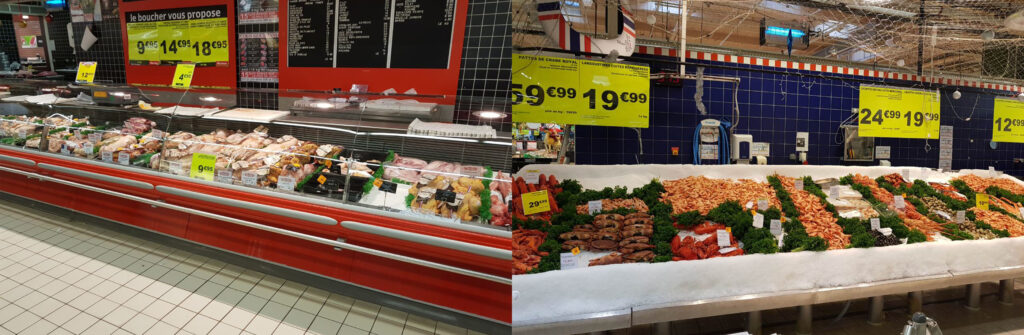
I was impressed by the volume of merchandise available, the quality of the displays and the modernity of the concepts. Stores are not driven by a real estate approach, selling space to suppliers. You hardly find a brand signage, it is very clear that the store belongs to the retailer.
The goal which is selling more and more items to more and more customers is extremely felt in the outlets. The economic model is mainly based on volume sold. Quantity on display is not questioned and the depth of the range is not compromised, proposing a wide selection of regional products. Promotional displays for every end cap are massive with a large yellow signage, very often hand written. Dedicated discounts for loyal customers are available for each category.
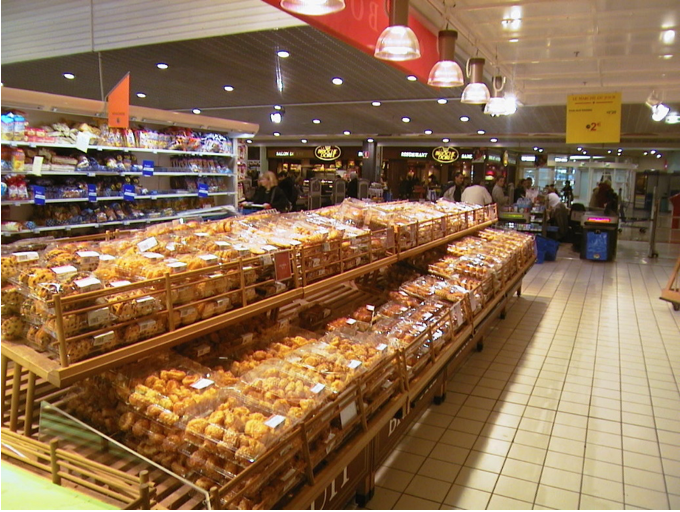
Fresh displays are also impressive through volume, range, display quality as well as freshness of the products that transpires everywhere in the area. Stores are obviously equipped to maintain the cold chain. Street market ambiance is being preserved. We commonly say that we buy with our eyes, this will be held particularly true in the Fish, Delicatessen and Cheese sections. Similarly, you can hardly resist to the smell of the bread and “viennoiseries” section. You will also be amazed by the wide offering of pre-packed fresh food, so convenient for every family size.
Services proposed by retailers are convenience oriented. The “drive” concept (your order and pick goods) is largely developed. Customers are also now used to self-scanning options. Electronic labels are on every shelf, guaranteeing price accuracy.
We could argue that the French food culture is unique, the climate very favorable to Freshness, the hypermarket concept that started in 1960 is already mature: these are all true.
However I see this concept as an opportunity for inspiration in many ways. It starts with the principle of the concept: complete control approach by the retailer instead of being real estate oriented or vendor oriented, risk taken on the stock and promotions, commitment to promote regional sourcing, creating a sense of authenticity for the customers, specifically but not limited to the fresh sections. True and large benefits granted to loyalty card holders.
Advanced technology is only brought to enhance the customer’s shopping experience. Most of the solutions for faster payment are based on trust. Are retailers ready to give it to customers? Should the focus be on the process to progressively educate the customers?
With the online business development, physical stores are actually challenged. There is a trend to reduce big boxes assuming that a part of the business is and will be taken online. Convenience stores or smaller grocery formats are also seen as a threat. But in reality, they catapulted to growth as they occupied the space not covered by larger formats.
In fact, I see the size concern differently for the food retail business, particularly in countries wherein the size has been commonly compromised. Based on my experience, larger size stores with well-chosen locations provide retailers the opportunity to entirely express their commercial concept, and most often become the flagship(s) of the retail chain with a very superior sales level and an enviable profitability over time.
This might be perceived as counter trend but the “applicability” of the trend is a question of maturity in the retail business. Let us take this new year as a chance to seize the true opportunities awaiting us in the retail industry!
Millennials on the past years have gained the spotlight in the society. Though their sphere of influence had been around for quite some time, getting familiarized with them is still a tedious job at hand.
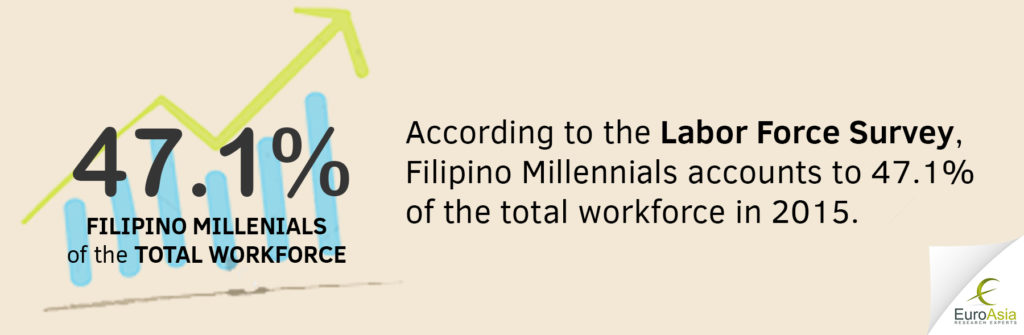
According to the Labor Force Survey, Filipino Millennials accounts to 47.1% of the total workforce in 2015. With this data, it would be easy to conclude that Millennials will be a bigger and bigger determinant in decisions that every retailer should make. But in order to fully capture the attention of Millennials might be a little tricky as they are more diverse hard to predict compared to their predecessors. It is worth considering that in order to understand their spending behavior, it is important to know the factors that pushes them to make their purchases.
Spending habits of Millennials
Getting used to the purchasing behavior of millennials can be challenging. For one, the factor that pushes them to decide to buy a certain service or product can be highly subjective. Millennials have a knack to purchase anything that would make them feel good and important than others. It is highly imperative for retailers to make sure that the products they are selling are always in the best possible condition and the shopping experience is memorable for the consumers. Millennials are after experience that will make them a star of their social media accounts. Most of the time, the purchases that millennials make are for validation that they are having a good life, or in a more millennial term, completely “instagrammable”.
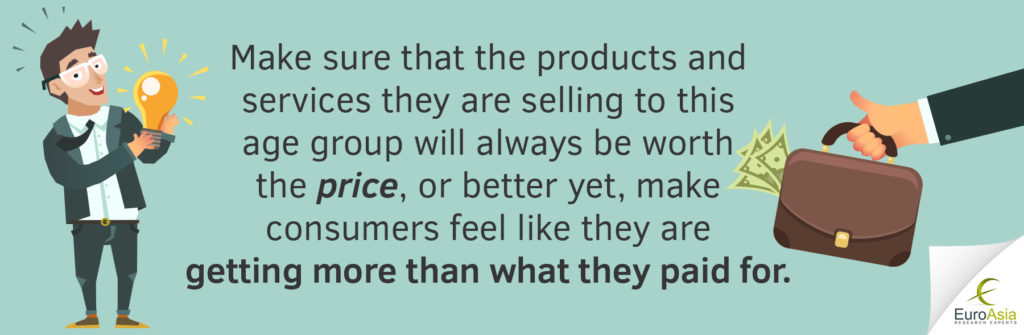
Another common behavior that can be observed among the said age cohort is their maturity in making their purchases. Millennials are always tagged as “Smart Buyers”. This is a good connotation most especially if you belong to the age group. Yet smart buying is not intrinsic among millennials. This could be reflected on the factor that the current situation is pushing millennials to be wiser in spending their hardly earned money. It is important for retailers to take this factor into consideration to make sure that the products and services they are selling to this age group will always be worth the price, or better yet, make consumers feel like they are getting more than what they paid for.
It can also be noted that Millennials are keener to pay for experiences than material objects. The number of traveling agencies have grown dramatically over the past years and the rising inclination to travel also distinguishes Millennials from its predecessors. Again, traveling can come as a self-gratification that you are getting more than what you paid for. Experiences and memories are intangible and it cannot be measured by durability, taste, or appearance. Anything that can give you a sense that you’re getting something that cannot be measured keeps Millennials – and even other generation to be on their feet traveling and seeing the world. Retailers are not blind to not see this trend. Most companies are coming up with branding strategies that can capture travelers. Such as coming up with freebies that would come in handy while traveling, making travel-size packaging, using flight tickets as prices to certain promos and other travel-related marketing strategy.
Millennials are more diverse
In order to successfully market to millennials, it should be accepted that they are a diversed group. The interconnectedness brought about by technology and social media gives the millennials the space to freely express their varying opinions and beliefs and feel totally fine with it. In fact, in the present time, being different from a pack is not frowned upon like in the past and respect for other’s opinion and preference is highly encouraged.
To cater to multi-faceted millennials, retailers should always tailor-fit their services and brands that could accommodate specific segments in the society instead of the usual generality in the demographics.
Interconnectedness among Digital Savvy Millennials
As previously mentioned, Millennials are digital savvy individuals interpolating technology to communication and self-expression. They use the digital platform not only to communicate with the people they know but also to express themselves to other people, whether they are the ones they know on a personal level or not. Needless to say, more and more people are populating the online world nowadays. Retailers had been quick to recognize this. Though e-commerce is not a new concept, it continues to innovate each year by coming up with a more convenient way to sell products and services, as well as becoming more consumer-centric.
It is important for retailers to gain presence or start on being recognized in the online platform. This is proven to be a very effective medium of communicating with consumers as well as boosting the company or the store’s reach.
Are millennials completely taking over?
It is a highly contested topic whether millennials are completely taking over or not. Some of their predecessors are still in the workforce and are still making a significant percentage of population in the market with high purchasing power. Though it is imperative to be prepared with the rising influence and number of millennials, it would be a fatal mistake to disregard other generations. The past generations are the ones with more dispensable income to spend and retailers should always keep that in mind. The best advice would always be to be prepared on whichever medium a consumer would choose to use as well as be prepared on whatever generation your prospect customer would belong to. The current situation calls for retailers to be more flexible than ever in order to cater to their consumers’ demands.
Majid Al Futtaim is famously known in Middle East as a retail company giant. Yet for people well-conversed in the retail world, Majid Al Futtaim is a business magnate who knows how to seize opportunities that is hidden from plain eyesight for most people. He is someone who knows how to set his vision and can dauntlessly invest time, resources and effort to make that vision a reality even on the long run.
1994 witnessed the opening of the first MAF Mall with Continent, one of the leading French Hypermarket brands, a main anchor tenant.
The hypermarket was built inside what is famously known today as Deira City Center. As of today, DCC is surrounded by commercial and residential buildings – a stark contrast to how it was 23 years before when it is situated in the middle of nowhere. Majid All Futtaim, through his vision saw this as a good opportunity. After all, why build a business surrounding others when you can let others surround yours?
Just as many success stories, Majid Al Futtaim faced difficulties particularly at the onset of his retail business. But the visionary know that stopping is not an option when it gets difficult. To make up for a better planning and management of the business, Majid Al Futtaim hired retail experts from Europe, mainly from France to help the business grow. Being a wise risk-taker, Mr. Majid knew that the key to make his business grow is investing on people who have the expertise and experience to prepare his business for development and to harness its potential for growth at its fullest extent, using the best retail standards and practices not just in France, but from the whole world.
And just as expected, the business grew. In 1998, MAF retail launched its second hypermarket branch in Ajman to spread its influence and exposure.
Dominion over the region
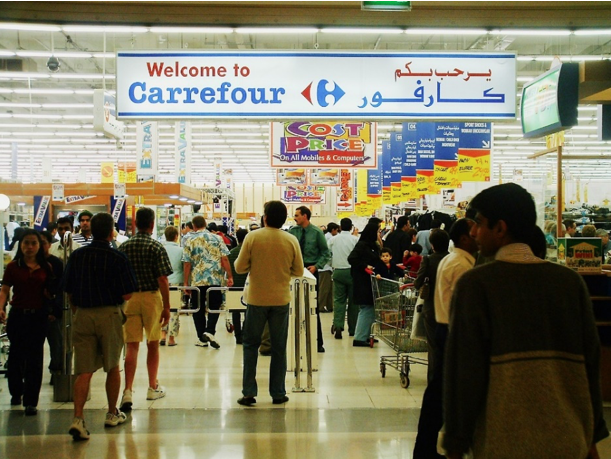
Majid Al Futtaim continued the vision to hold dominion over the region. Several branches quickly opened up in UAE particularly in Al Ain, RAK, Abu Dhabi and Sharjah. By year 2000, Carrefour’s acquisition of Continent enabled the change in the name of hypermarket’s name and logo yet the quality of services was not altered and still operated with the same recipe for its success: strategic sites, large footprint, mid to large size malls and strong hypermarket concept as a foot traffic driver. Furthermore, the change of the brand to Carrefour only strengthened with the support of French Retail Leader.
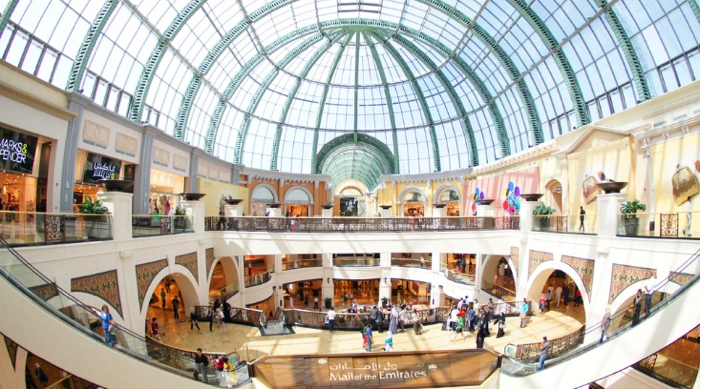
The peak of MAF’s success could be seen upon the development of Mall of Emirates. Being the visionary that he is, he built the mall despite its isolation and opened it in 2005. The mall is notable for its architectural design, innovation, accessibility, tenant mix, hotel selection and large hypermarket. Mall of Emirates is manifestation of group expertise in planning, designing, managing projects and operating malls. It clearly reflects the demand for perfection by its owner, Majid Al Futtaim. Easily, Mall of Emirates can be compared to top malls around the world.
The hypermarket concept
The concept of “everything under the same roof” rapidly gained success. Year after year, it was improved and modernized while adding value to the product range. However, apparel department with basic items and poor development in novelty or fashion items remained its weakness. Similarly, Asian food product range used to be behind – a mistake considering that more than 50% of the population living in Dubai are Asians.
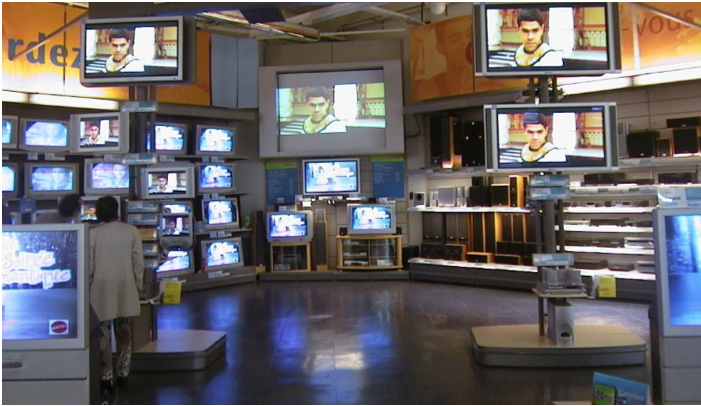
On a positive note, the management kept on modernizing the electronics and appliances department that hit the highest market share among Carrefour Stores worldwide. All thanks to the tax free environment in Dubai, which led to comparatively cheap prices attracting more visitors in the country. It is common to see people at the airport bringing home electronic gadgets that they had just purchased.
The management of the Fresh Department was also ameliorated step by step. The concepts such as bread and pastry, meat, and fruits and vegetables were improved to meet European standards.
The overall concept went through changes year after year, CEO after CEO. Moving from a basic supermarket to a modernized version of the hypermarket. The discipline in managing the stores was also a contributing factor – from asset standards to cleanliness, hygiene standards and product availability.
A Competitive Environment
The competition surrounding MAF stores became progressively more aggressive each passing year. More retail brands opened, developed and benefitted from the positive economy of the region. Lulu, Carrefour’s main competitor, was able to develop faster with an arguably more flexible size and less complex concept than MAF Carrefour.
On the other hand, small and local cooperatives with scheme dedicated to national citizens and with comparatively cheap prices remain an alternative for the mass market.
Another brand, Spinneys, captures mainly the expats’ market with a more premium concept covering small and medium size supermarkets. Instead of fully competing with Carrefour, they went with a different concept, capitalizing on the superb management of fresh products as well as offering unique and exclusive imported product range. When it comes to the Asian products range however, Carrefour had also set its eyes to observe Choitram, particularly its supermarket concept.
Carrefour outside UAE
Though MAF Carrefour was proven to be a true success in UAE, Oman and Qatar, its development out of its comfort zone had been sometimes challenged for various reasons.
Political Stability MAF success and expansion in Egypt has been challenged by the political unrest happening in the country that time. Lately, the introduction of the VAT in the country played another negative factor role. However, the investment remained a smart move for the company. To the contrary, the unpredictable turn into a civil war in Syria ruined the Plans of MAF to develop in the country after the opening of the first store in Aleppo which also closed due to unrest in 2011.
Aggressive and Dominant competitionIt can be argued that Saudi Arabia has been one of the most difficult exercise for MAF as the country was already dominated by strong local players specifically the main retail chain in KSA: Panda. Panda’s outlets are scattered all over the country with a solid commercial concept demonstrated in their hypermarkets and supermarkets. Other local retailers are also driven by low cost approach which Carrefour had difficulties to answer considering their sales volume and standards to maintain.
The recipe for success
It has always been said that there is no definite secret to success. Different stories, different recipes. Yet for Majid Al Futtaim, it is a story of setting the right vision and taking risks to transform it into reality. He followed his exemplary intuition then transformed them to opportunities. More importantly, he placed his trust on the people he surrounded himself with. He knew that these experts in the retail field will not fail him and the business they worked so hard to achieve. His business is not simply made of investments, it is made by people and for the people.
MAF’s group of advisers are always on the look for opportunities and propose strategic development. The relationship between Mr. Majid and his advisers can always be described as mutual friendship and protection. A solid partnership between parties that will not let each other down is one of the foundation of his business. However, knowing that change is constant, he doesn’t hesitate to change plans or people as the situation requires it. In this way, the company, despite being susceptible to change is always able to keep up and thrive.
Mr. Majid also knows that his company alone cannot be independent of government. He established a politically correct and good relation with Dubai Government, particularly with Sheik Maktoum. Sharing the same vision for development and success, MAF Retail had always been in close and cooperating ties with its “mother” government.
The Mall development and management expertise
MAF Malls are not only a reference in the gulf region, but also a model for the retail industry worldwide. The expertise in developing and managing medium to large size malls and the transition of mass market oriented malls to reasonably luxurious malls were established. Mall of Emirates had always been considered as a piece of art in the industry offering innovations in entertainment such as ski station among others.
The tenant mix in the mall was improved and the attractiveness of the malls was also proven. Because of this, regional and international brands lined up to be part of MAF Malls despite considerably higher price for rent. The selection of restaurants was also well sought, from quick food to fine dining experiences.
Again, experts from other countries contributed to the growing success of the Mall concept, offering competitive advantage to Carrefour Hypermarkets.
MAF Retail: From a centralized to a decentralized retail organization
From the opening of Continent in 1994 until early 2000’s, the head office structure was almost non-existent, limited to a CEO, a Vice President and CFO to ensure financial reporting. The management of the operations and the merchandise were totally delegated to the stores. But after 8 years of experience and maturity in the retail world, MAF Retail set a head office structure with a merchandising department.
Between 2003 and 2010, MAF Carrefour strengthened the corporate office and support to stores primarily due to the influence and help of a new CEO back then. With the expansion, an international head office was also created to ensure consistency in management across different countries, alignment in standards and correct setting of corporate governance principles.
Initially led by French Retail Experts from the support group to operations, the Profile of the managers progressively changed with a strong “Arabization” of the management which seemed to be a natural characteristic among Arab countries. Internal promotions were also prioritized to face the fast development pace.
As MAF Company evolved and grew in size, the corporate governance was put in place and control over MAF retail operations from the holding limited its autonomy, different from what the retail management enjoyed for several years. For the past decade, the management of the stores was totally strategized and controlled from the head office, leaving little space for individual initiatives. Thus, the influence of international experts is limited to core support functions of the head office as few remained to operations.
Partnership with Carrefour
In 2013, MAF Holding acquired the remaining 25% stake from French Retailer Carrefour Group for 530 million euros. From a joint venture, MAF Holding held the regional franchise for Carrefour – the world’s second biggest retailer after Walmart. Under the signed agreement, MAF will own 100% of the shares and the franchise will be extended until 2025.
MAF Today
MAF continues to do excellently in its home country, UAE. 2017 was another year of record, however, there are some fears on the impact of the VAT implementation in the country after years of enjoying tax-free privilege.
MAF also continues to thrive well outside UAE as it is now present in 15 countries operating a total of 90 hypermarkets and 120 supermarkets.
Among the countries it had reached, Iran seemed to be a very promising country as one of the two Carrefour stores is already challenging the food sales performance of MAF’s branch in MOE. Pakistan also displays a promising market. However, Eastern European countries seem to be in resistance to the company’s proven model as it remains challenging to MAF Retail.
MAF in the future
Mr. Majid is without any question the man who turned his vision into reality. The idea and process of developing medium to large malls with unique standards associated to a traffic generator such as Carrefour or Continent at the beginning was a very innovative strategy 20 years back in UAE and Gulf Region. It had not been an easy start and the risks are high, but the true visionary that he is, he decided to move forward. Fast forward to 25 years after his company was first founded in 1992, the success of Mr. Majid is nothing short of amazing.
In managing his business, Mr. Majid was able to avoid the traps of changing category, from a small company to a large company, he made it a point that strict compliance with corporate governance principles will remain. Another reason for its success can be attributed to the establishment of a proper delegation of authorities. While most business owners would have difficulties to let go of their businesses and delegate authority to the management in place, Mr. Majid put his trust on his people and did not waste time doubting the people who also put their trust on him. Delegations with proper control level have been in place since the beginning to the point that even Mr. Majid and his advisors have limited interferences in the day to day business as he had always put his focus on prioritizing strategic development for longer term goals in order to safeguard his company from possible challenges that could affect it in the future.
From this point, it will be needless to say that MAF Retail’s future is already envisioned somewhere in Mr. Majid’s mind. His actions are always determined by his plans and he’s someone who can hardly be caught off-guard by any incident or circumstance that will be brought to the retail world – which is how retailers must always strive to be!